Wiggle Stool
Frank Gehry conceived the Wiggle Stool in the early 1970s as part of his groundbreaking Easy Edges series, a body of work that challenged every assumption about what furniture could be made from. The material, corrugated cardboard, was chosen not despite its ordinariness but because of it. Gehry found that laminating dozens of layers at alternating grain orientations produced a composite of surprising rigidity and warmth.
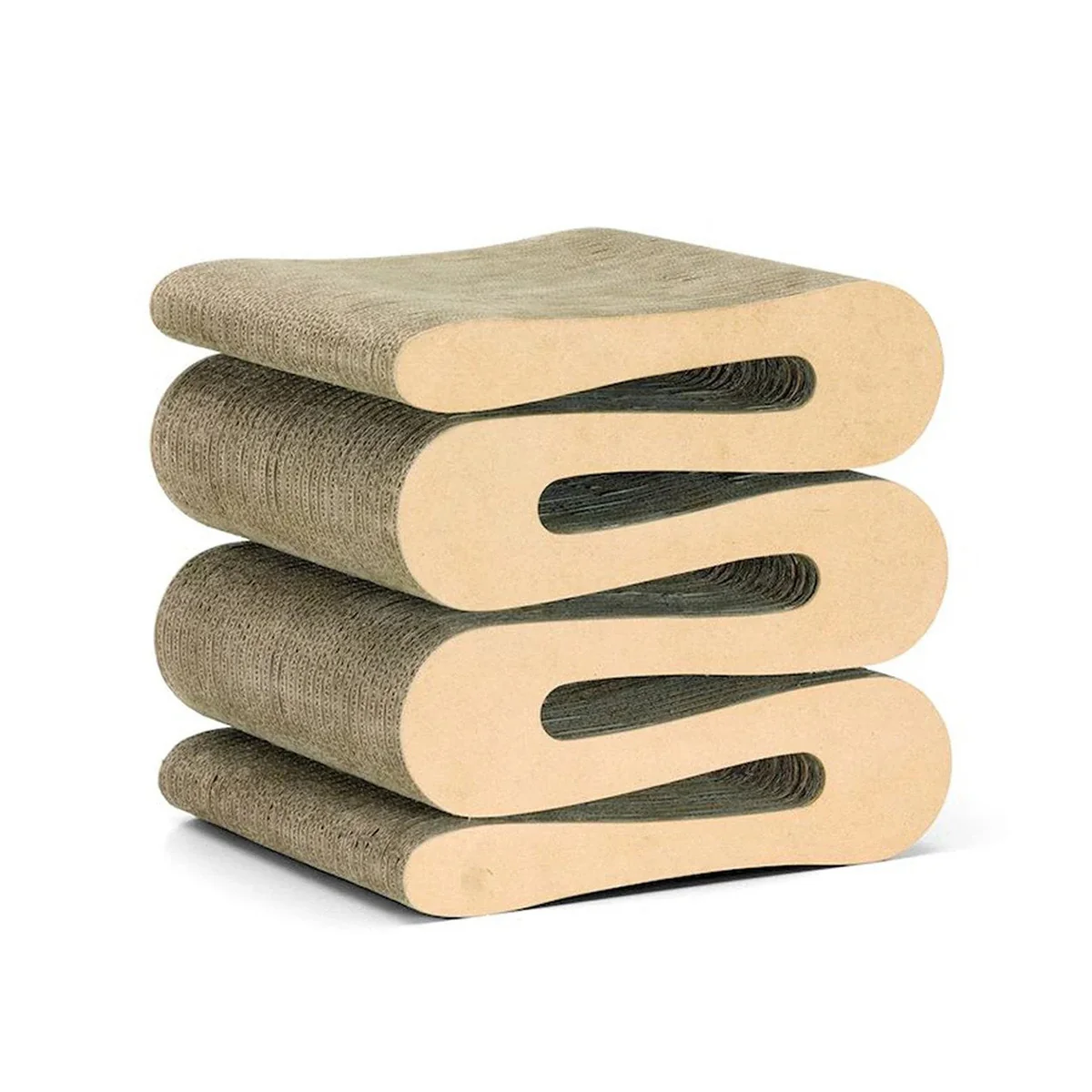
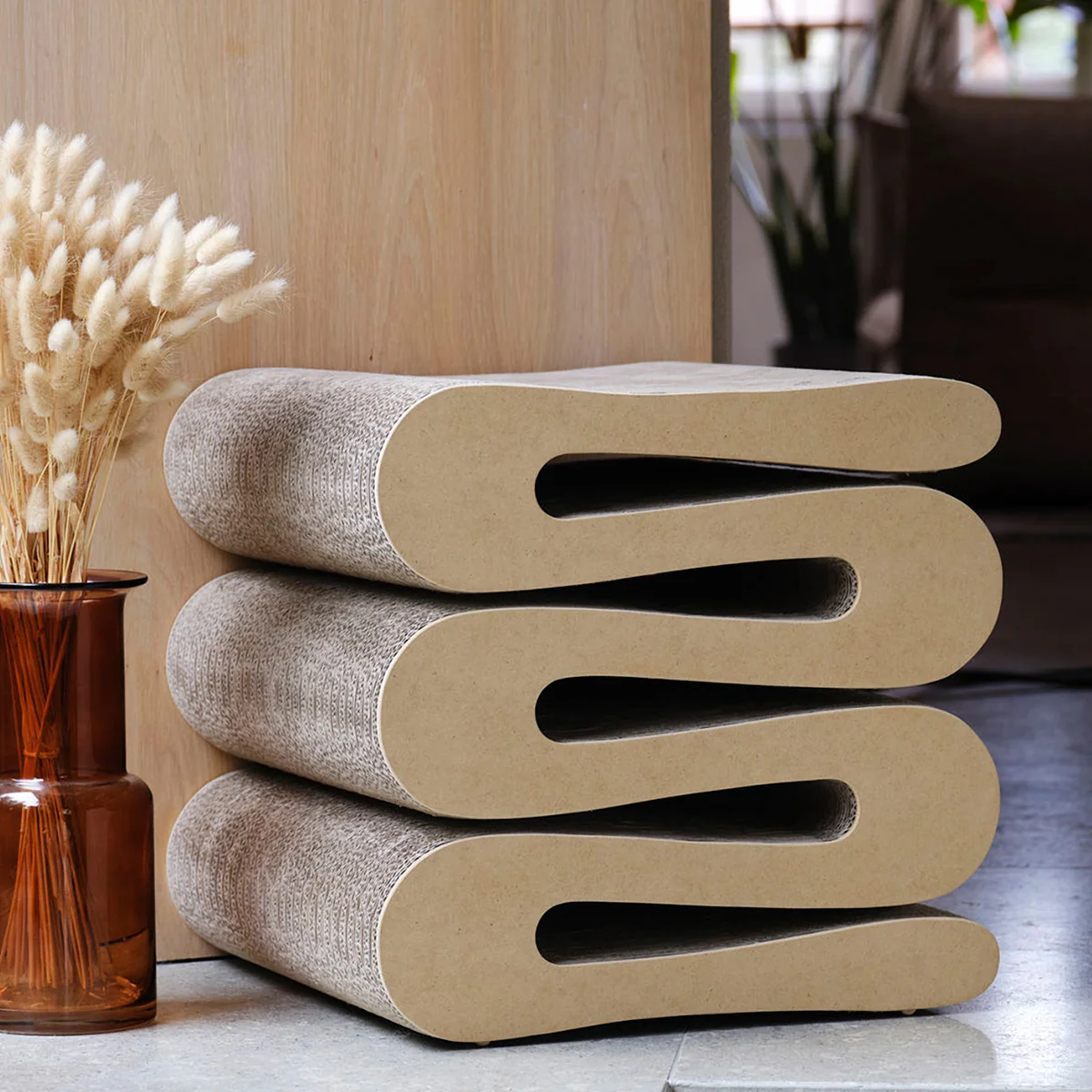
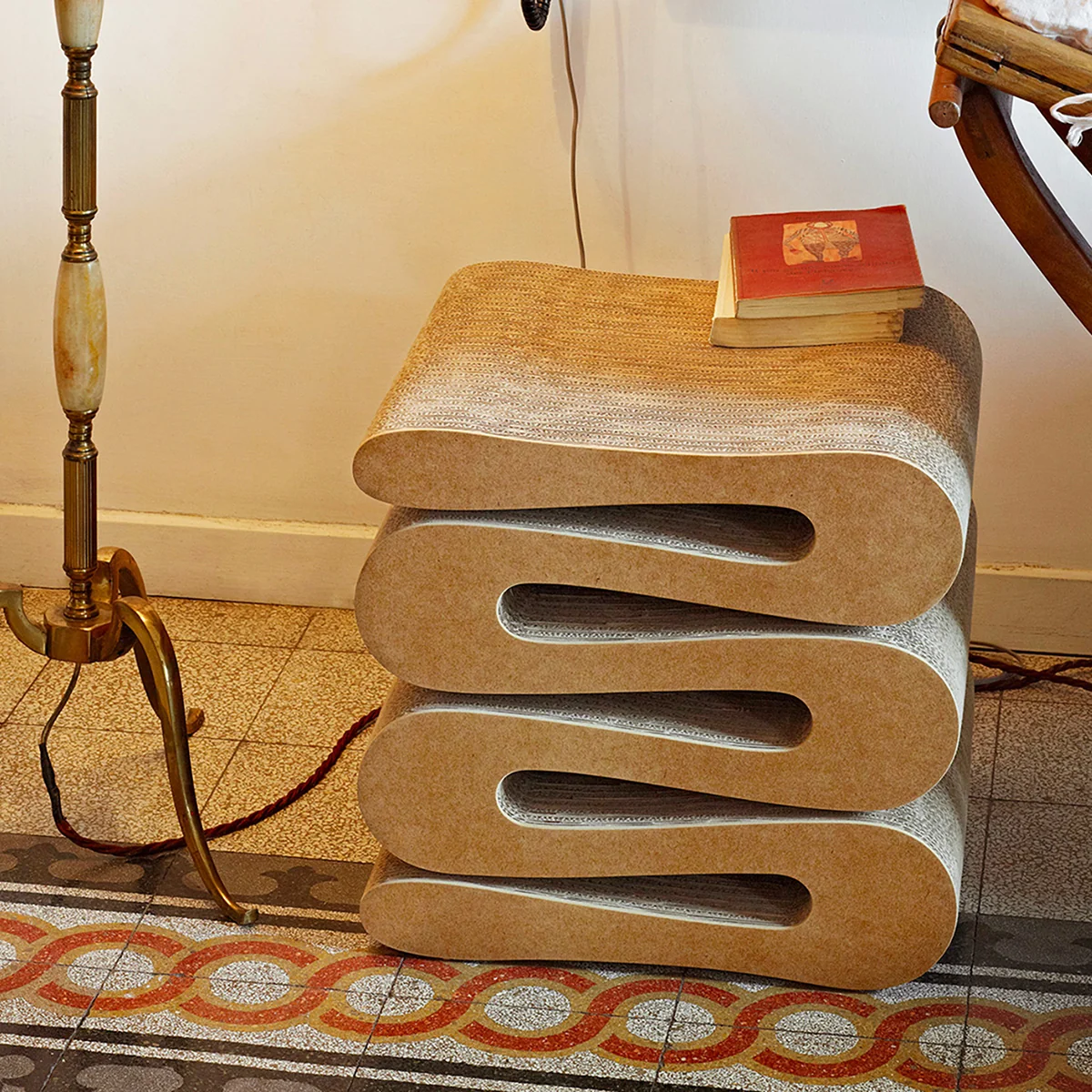
The form follows from the material. That sinuous, ribbon-like silhouette is not decoration applied to a structure - it is the structure, shaped to distribute load through curves rather than corners. The exposed hardboard edges read as fine striation, giving the piece a tactile honesty that rewards close attention.
- Constructed from layered corrugated cardboard with alternating grain orientation
- Exposed natural hardboard edges provide structural integrity and visual texture
- Part of Gehry's Easy Edges series, originally introduced in 1972
- Reissued by Vitra as part of its commitment to preserving landmark experimental design
At once sculpture and seating, the Wiggle Stool occupies a particular position in design history where architecture, art, and function converge without compromise.
Original: $925.00
-65%$925.00
$323.75More Images
Wiggle Stool
Frank Gehry conceived the Wiggle Stool in the early 1970s as part of his groundbreaking Easy Edges series, a body of work that challenged every assumption about what furniture could be made from. The material, corrugated cardboard, was chosen not despite its ordinariness but because of it. Gehry found that laminating dozens of layers at alternating grain orientations produced a composite of surprising rigidity and warmth.
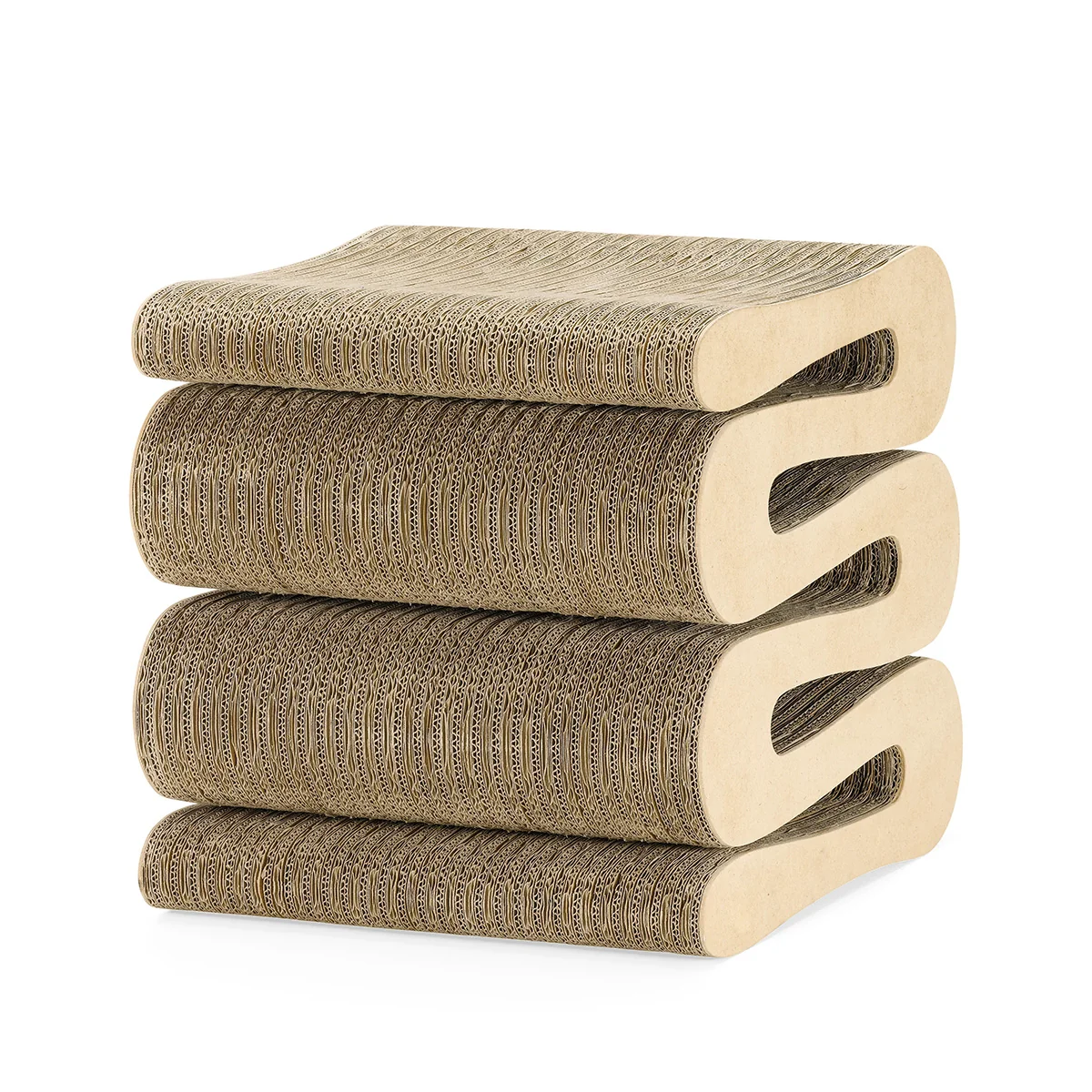
The form follows from the material. That sinuous, ribbon-like silhouette is not decoration applied to a structure - it is the structure, shaped to distribute load through curves rather than corners. The exposed hardboard edges read as fine striation, giving the piece a tactile honesty that rewards close attention.
- Constructed from layered corrugated cardboard with alternating grain orientation
- Exposed natural hardboard edges provide structural integrity and visual texture
- Part of Gehry's Easy Edges series, originally introduced in 1972
- Reissued by Vitra as part of its commitment to preserving landmark experimental design
At once sculpture and seating, the Wiggle Stool occupies a particular position in design history where architecture, art, and function converge without compromise.
Product Information
Product Information
Shipping & Returns
Shipping & Returns
Description
Frank Gehry conceived the Wiggle Stool in the early 1970s as part of his groundbreaking Easy Edges series, a body of work that challenged every assumption about what furniture could be made from. The material, corrugated cardboard, was chosen not despite its ordinariness but because of it. Gehry found that laminating dozens of layers at alternating grain orientations produced a composite of surprising rigidity and warmth.
The form follows from the material. That sinuous, ribbon-like silhouette is not decoration applied to a structure - it is the structure, shaped to distribute load through curves rather than corners. The exposed hardboard edges read as fine striation, giving the piece a tactile honesty that rewards close attention.
- Constructed from layered corrugated cardboard with alternating grain orientation
- Exposed natural hardboard edges provide structural integrity and visual texture
- Part of Gehry's Easy Edges series, originally introduced in 1972
- Reissued by Vitra as part of its commitment to preserving landmark experimental design
At once sculpture and seating, the Wiggle Stool occupies a particular position in design history where architecture, art, and function converge without compromise.