Bukva Bookcase
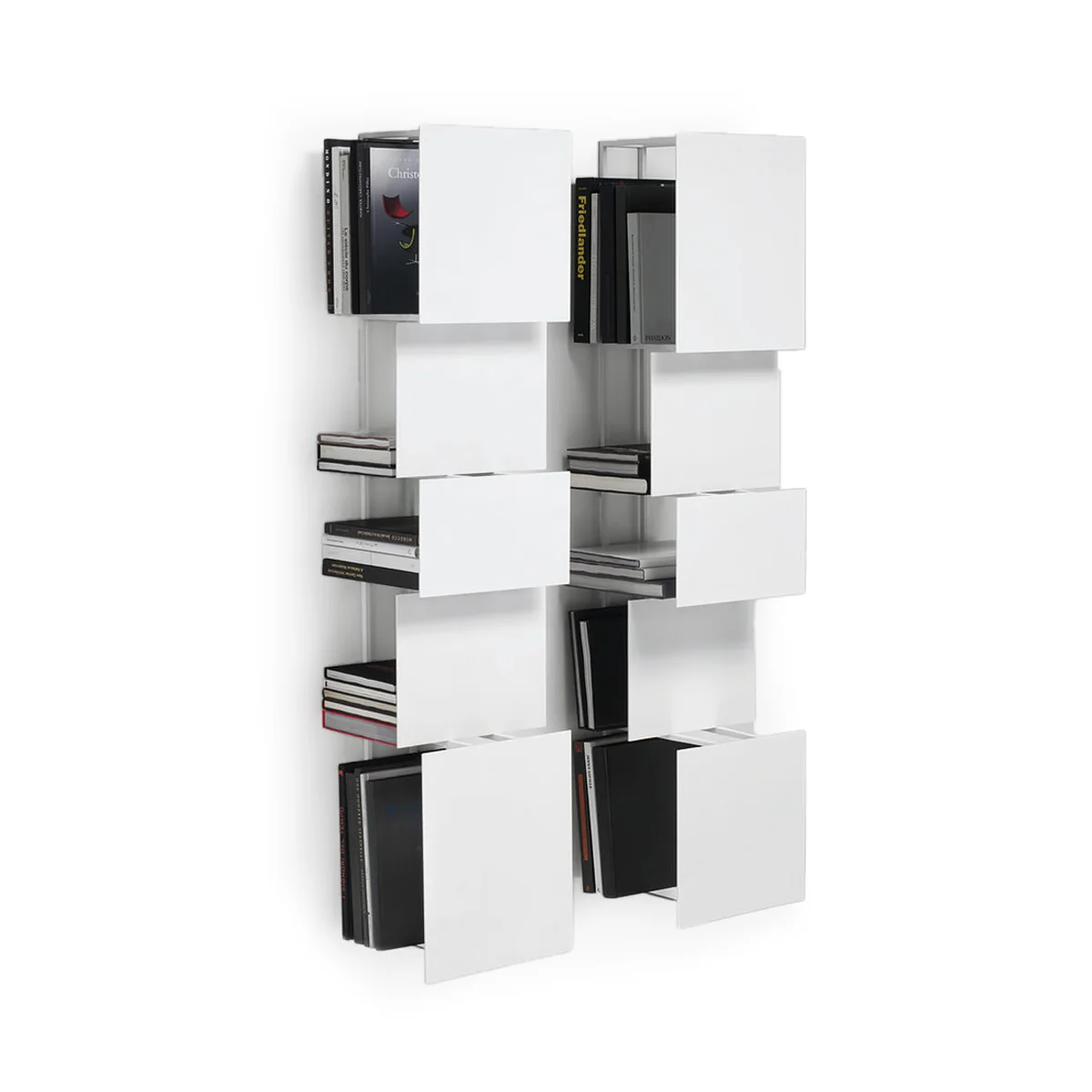
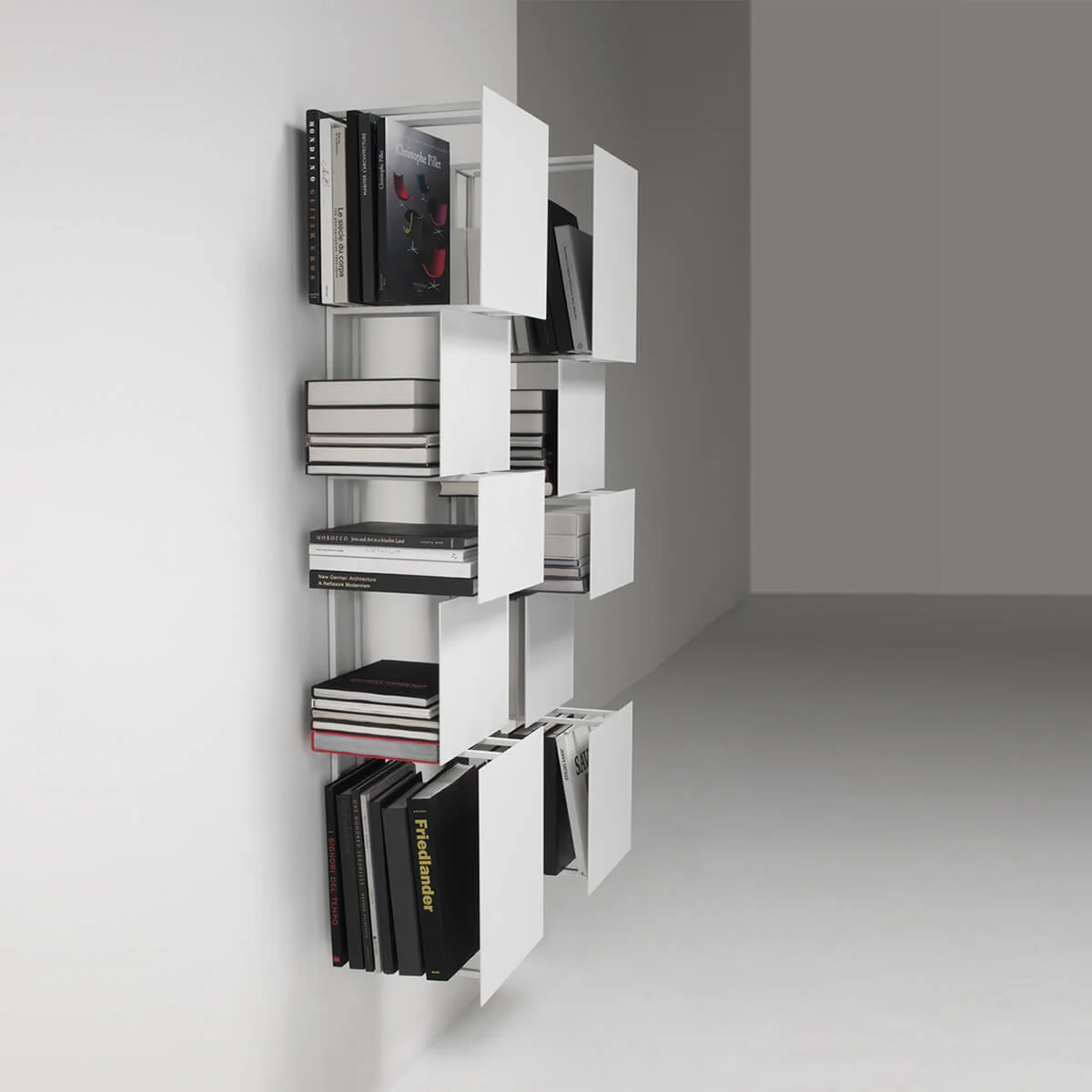
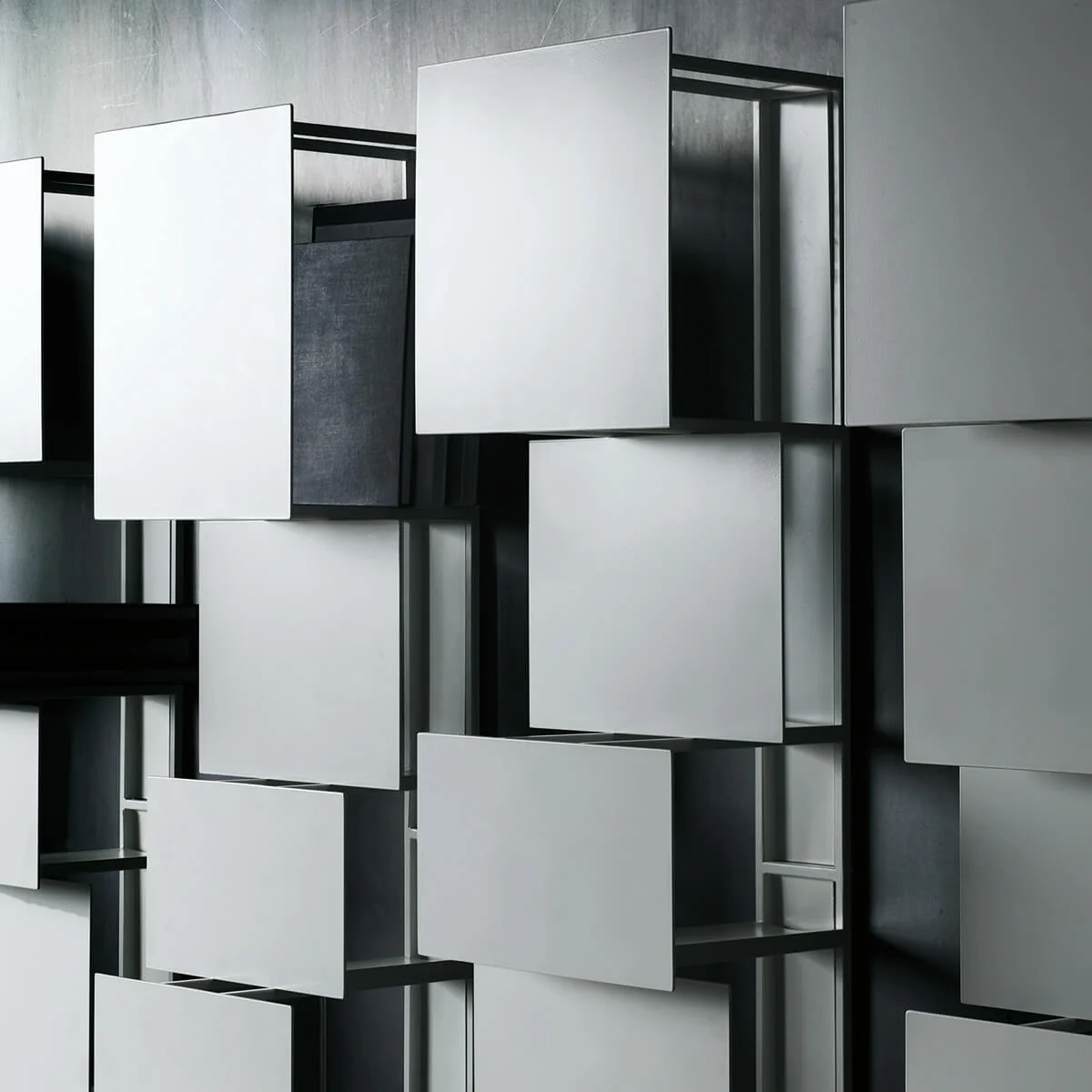
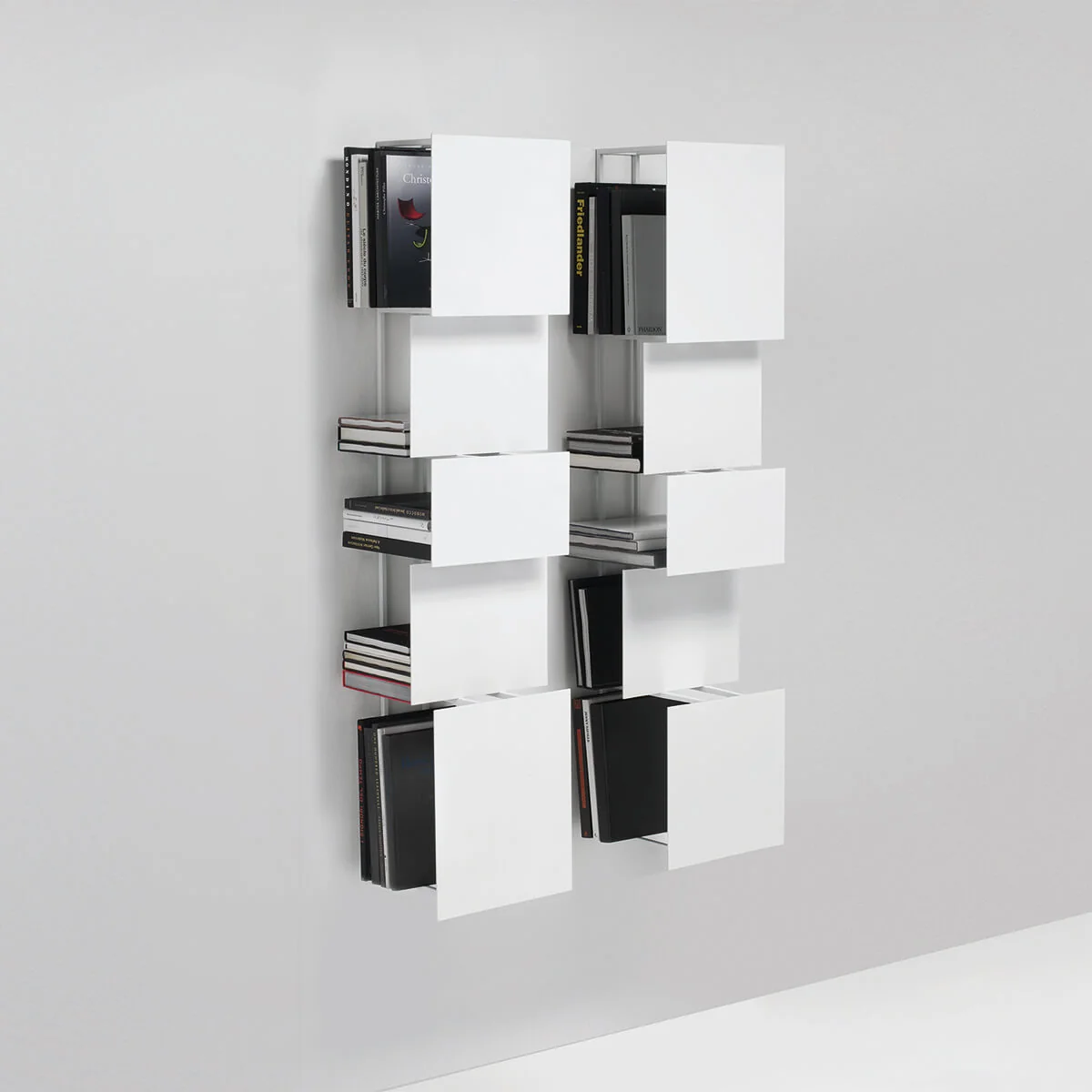
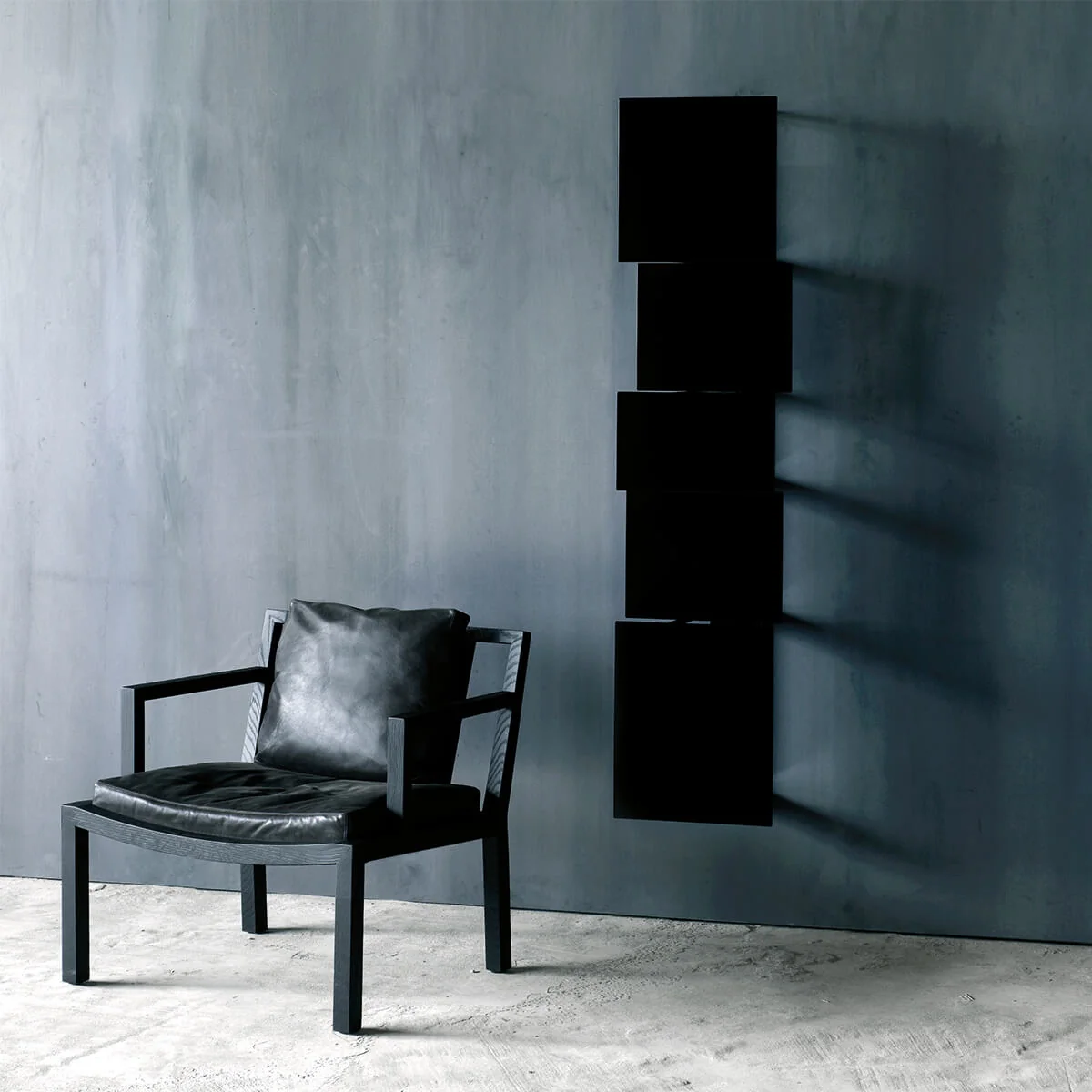
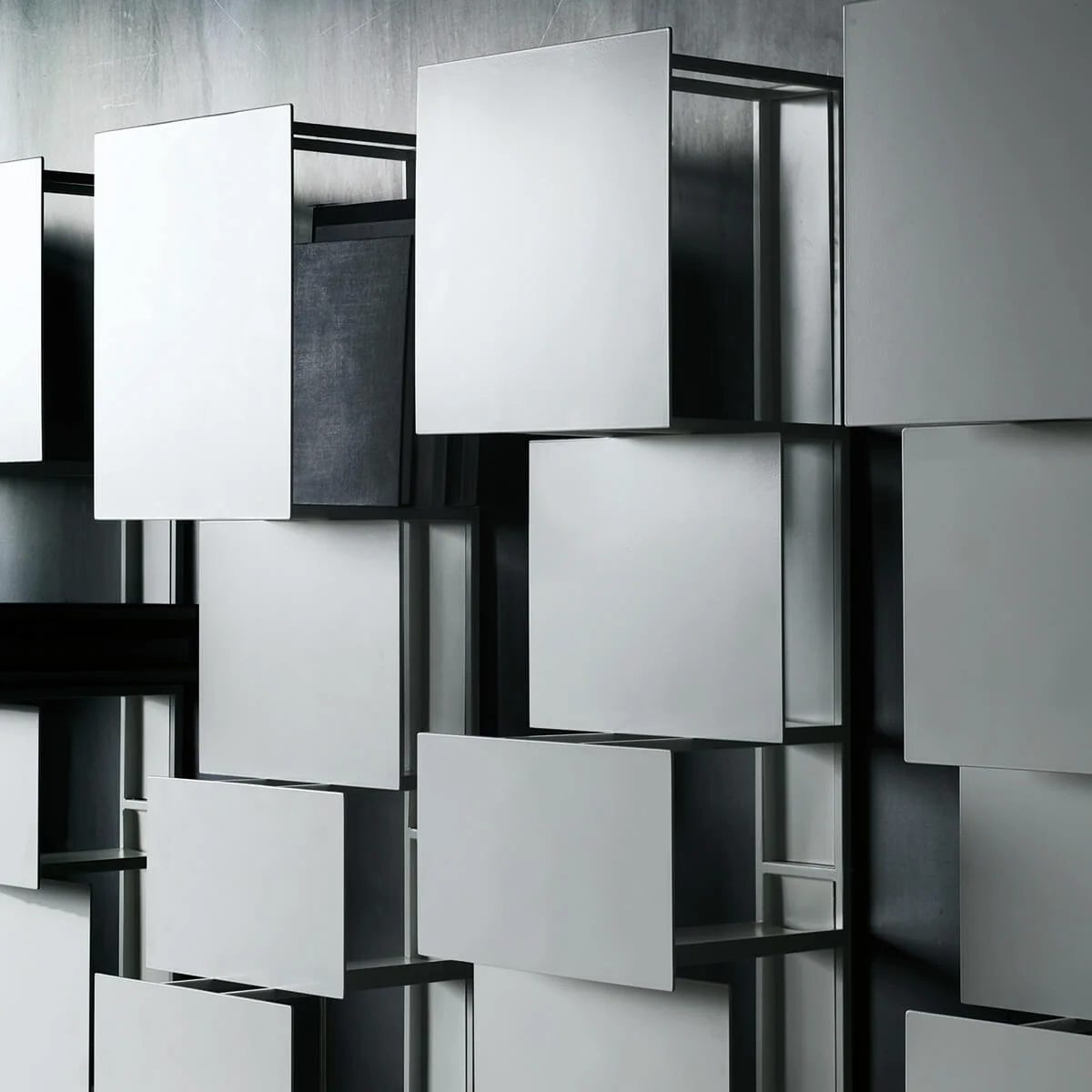
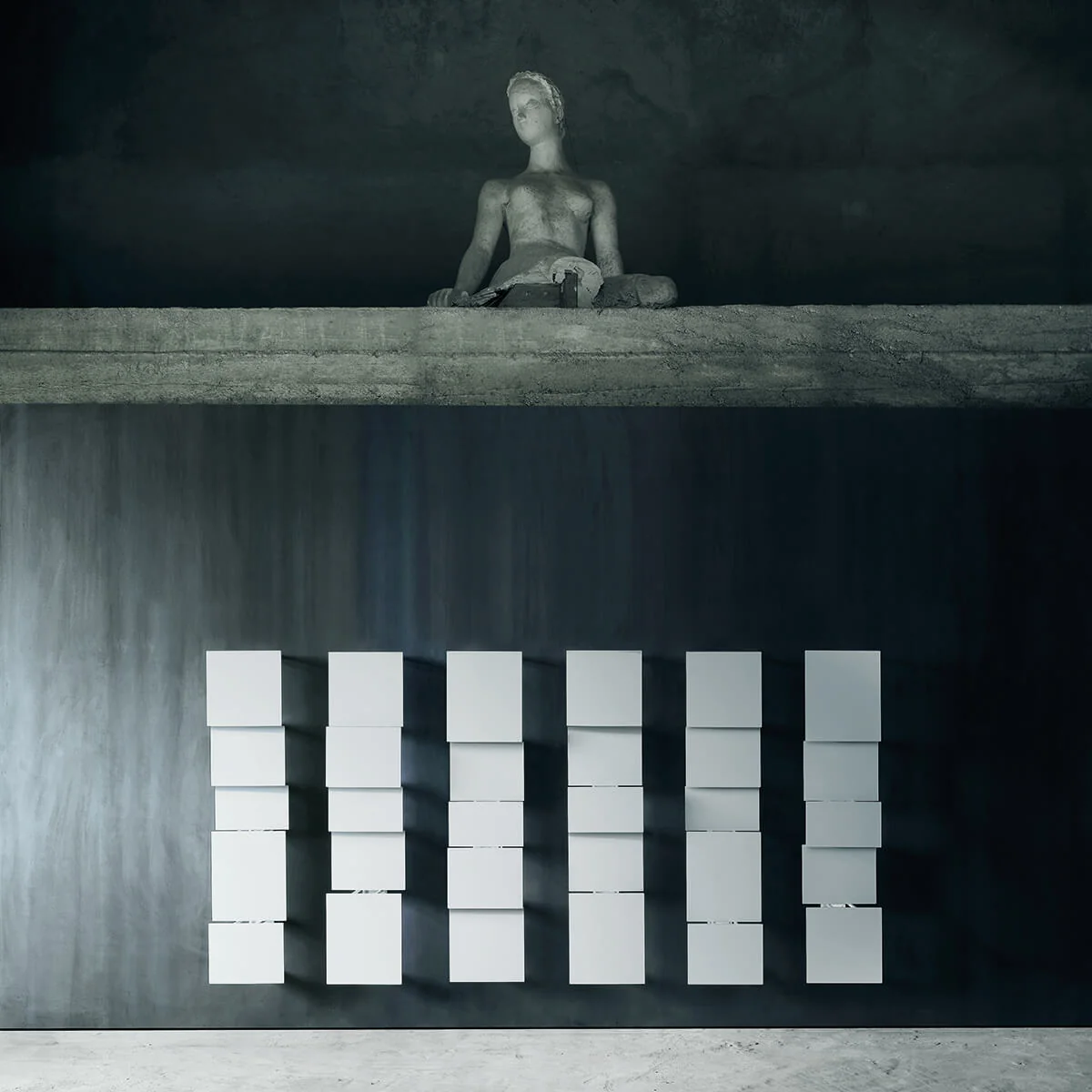
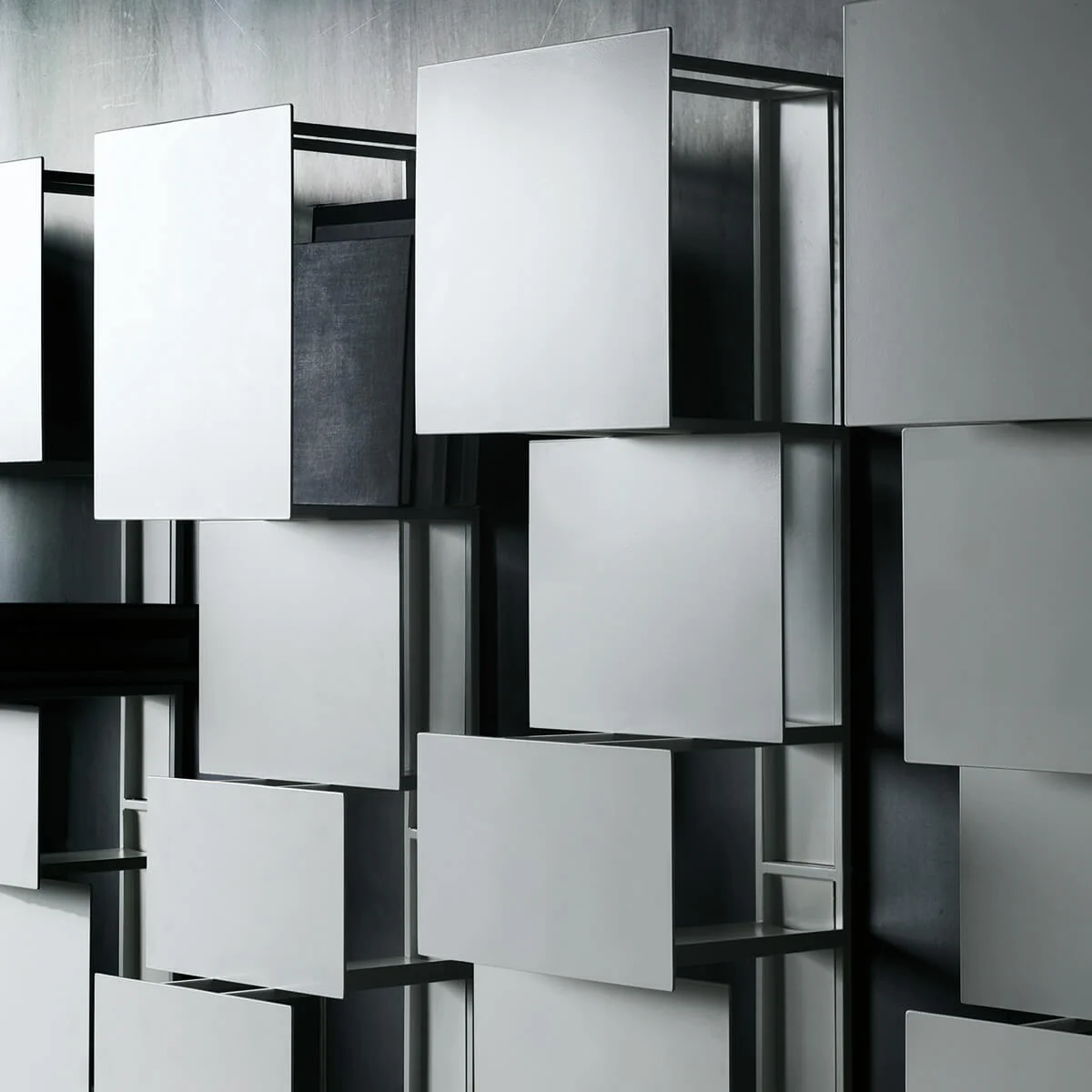
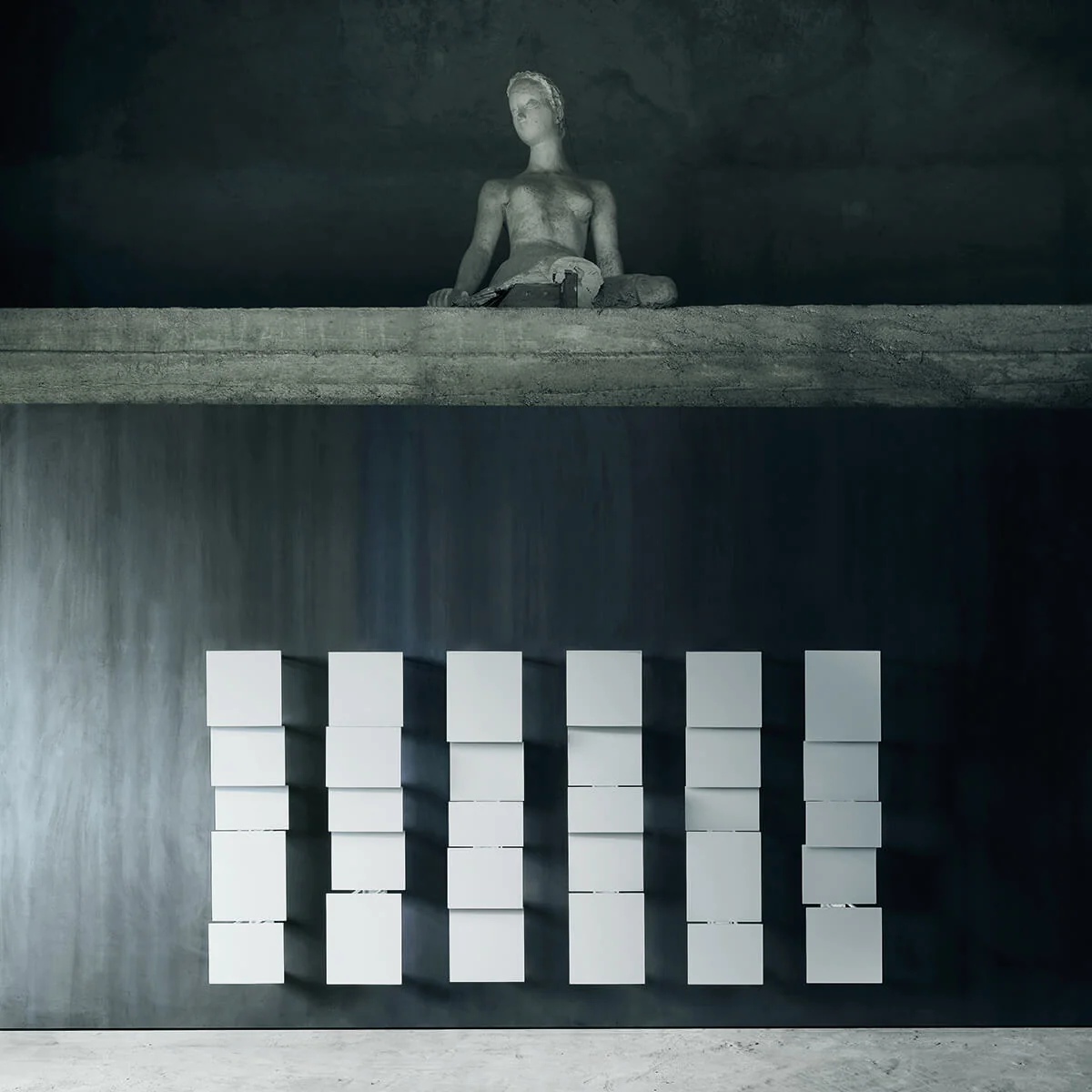
Victor Vasilev conceived Bukva as a wall composition rather than a piece of furniture. Where conventional shelving recedes, this bookcase asserts a sculptural presence: steel panels project from the wall at varying depths, generating a sense of motion across a fixed surface.
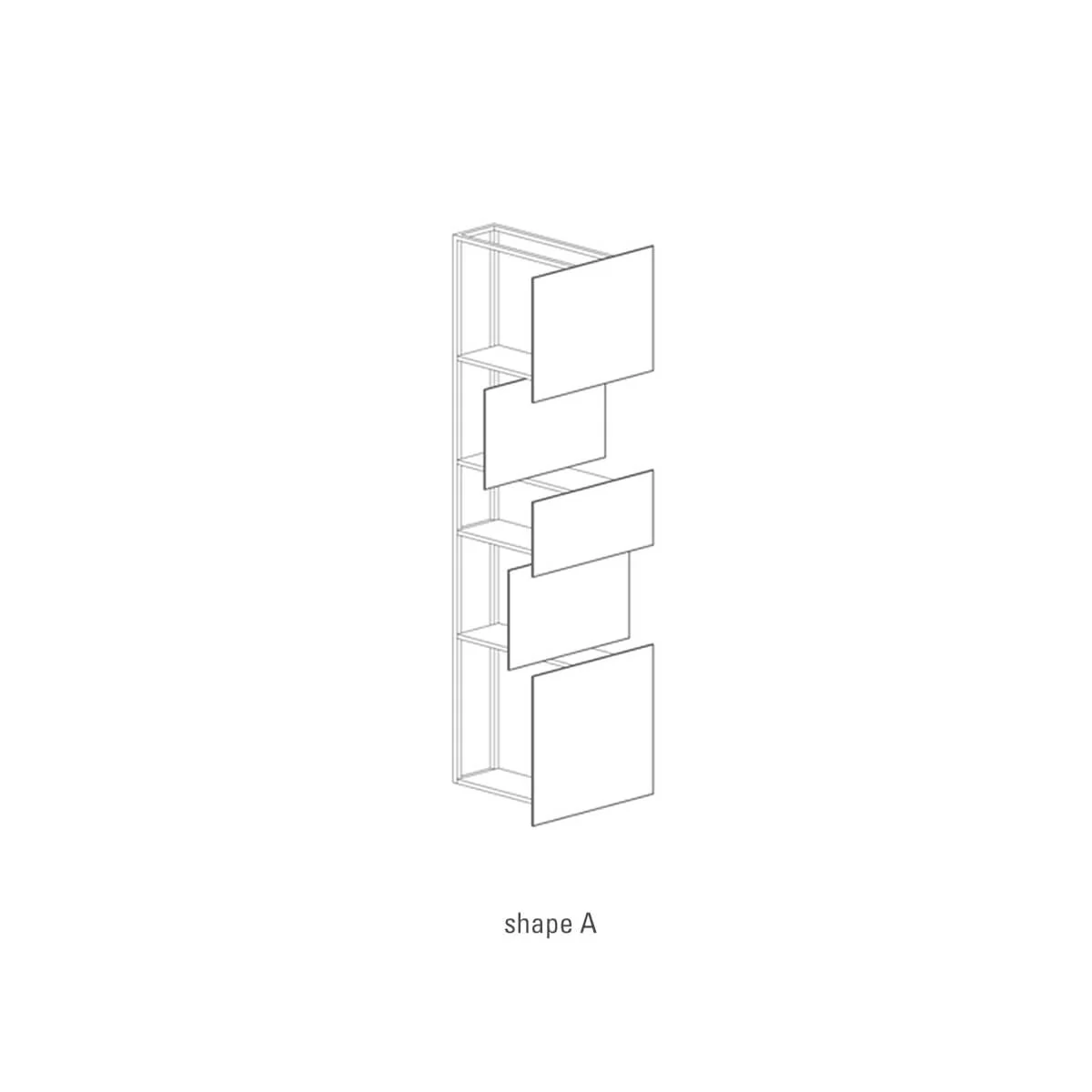
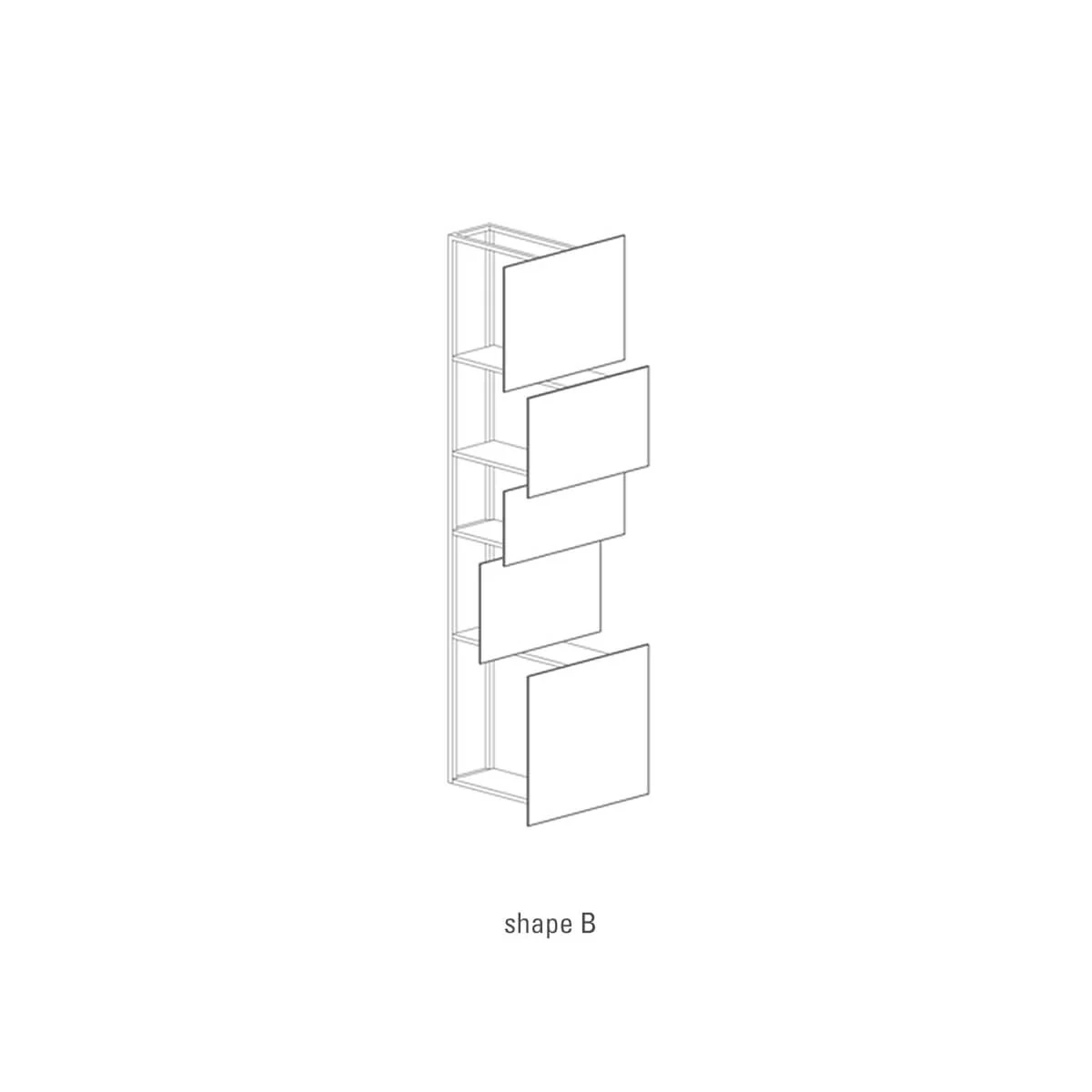
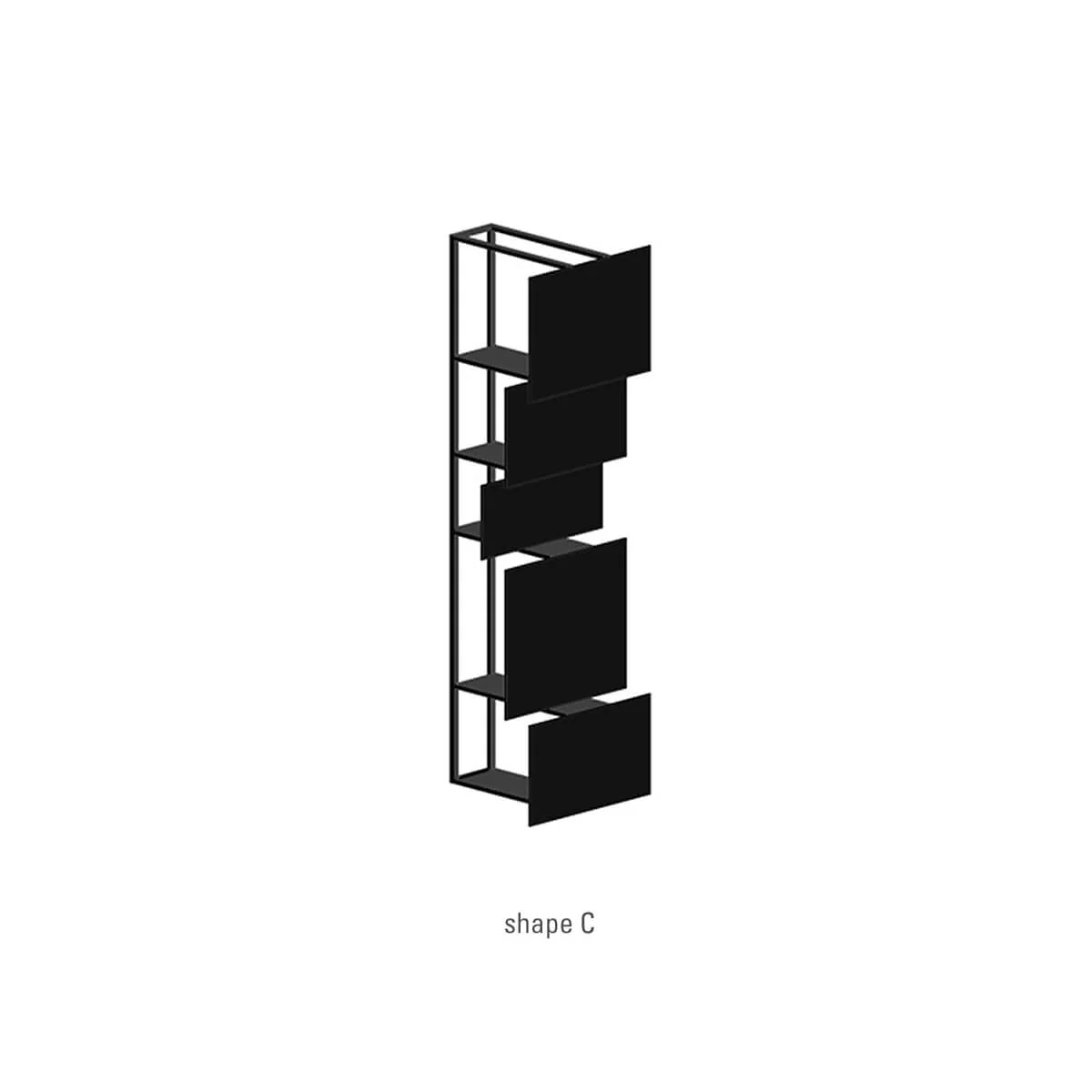
Each vertical unit is organized around five panels of differing dimensions, functioning as structural end caps for the book storage within. The shelves carry painted fronts that read as drawer faces, accessible from both sides. The offset geometry gives the whole piece the quality of a relief rather than a cabinet, so it occupies a wall the way an artwork does.
- Designed by Victor Vasilev for Living Divani
- Steel shelves with painted fronts in varied depths
- Five panels per vertical unit, each a distinct dimension
- Accessible from both sides
Vasilev, a Bulgarian-born designer long based in Milan, brings an architectural sensibility to furniture that consistently questions the boundary between object and installation. Bukva, meaning "letter" in several Slavic languages, treats each vertical unit as a glyph, something to be read across a wall rather than simply used.
Original: $2,356.00
-65%$2,356.00
$824.60More Images





Bukva Bookcase
Victor Vasilev conceived Bukva as a wall composition rather than a piece of furniture. Where conventional shelving recedes, this bookcase asserts a sculptural presence: steel panels project from the wall at varying depths, generating a sense of motion across a fixed surface.
Each vertical unit is organized around five panels of differing dimensions, functioning as structural end caps for the book storage within. The shelves carry painted fronts that read as drawer faces, accessible from both sides. The offset geometry gives the whole piece the quality of a relief rather than a cabinet, so it occupies a wall the way an artwork does.
- Designed by Victor Vasilev for Living Divani
- Steel shelves with painted fronts in varied depths
- Five panels per vertical unit, each a distinct dimension
- Accessible from both sides
Vasilev, a Bulgarian-born designer long based in Milan, brings an architectural sensibility to furniture that consistently questions the boundary between object and installation. Bukva, meaning "letter" in several Slavic languages, treats each vertical unit as a glyph, something to be read across a wall rather than simply used.
Product Information
Product Information
Shipping & Returns
Shipping & Returns
Description
Victor Vasilev conceived Bukva as a wall composition rather than a piece of furniture. Where conventional shelving recedes, this bookcase asserts a sculptural presence: steel panels project from the wall at varying depths, generating a sense of motion across a fixed surface.
Each vertical unit is organized around five panels of differing dimensions, functioning as structural end caps for the book storage within. The shelves carry painted fronts that read as drawer faces, accessible from both sides. The offset geometry gives the whole piece the quality of a relief rather than a cabinet, so it occupies a wall the way an artwork does.
- Designed by Victor Vasilev for Living Divani
- Steel shelves with painted fronts in varied depths
- Five panels per vertical unit, each a distinct dimension
- Accessible from both sides
Vasilev, a Bulgarian-born designer long based in Milan, brings an architectural sensibility to furniture that consistently questions the boundary between object and installation. Bukva, meaning "letter" in several Slavic languages, treats each vertical unit as a glyph, something to be read across a wall rather than simply used.