The Dark Side of the Moon Table
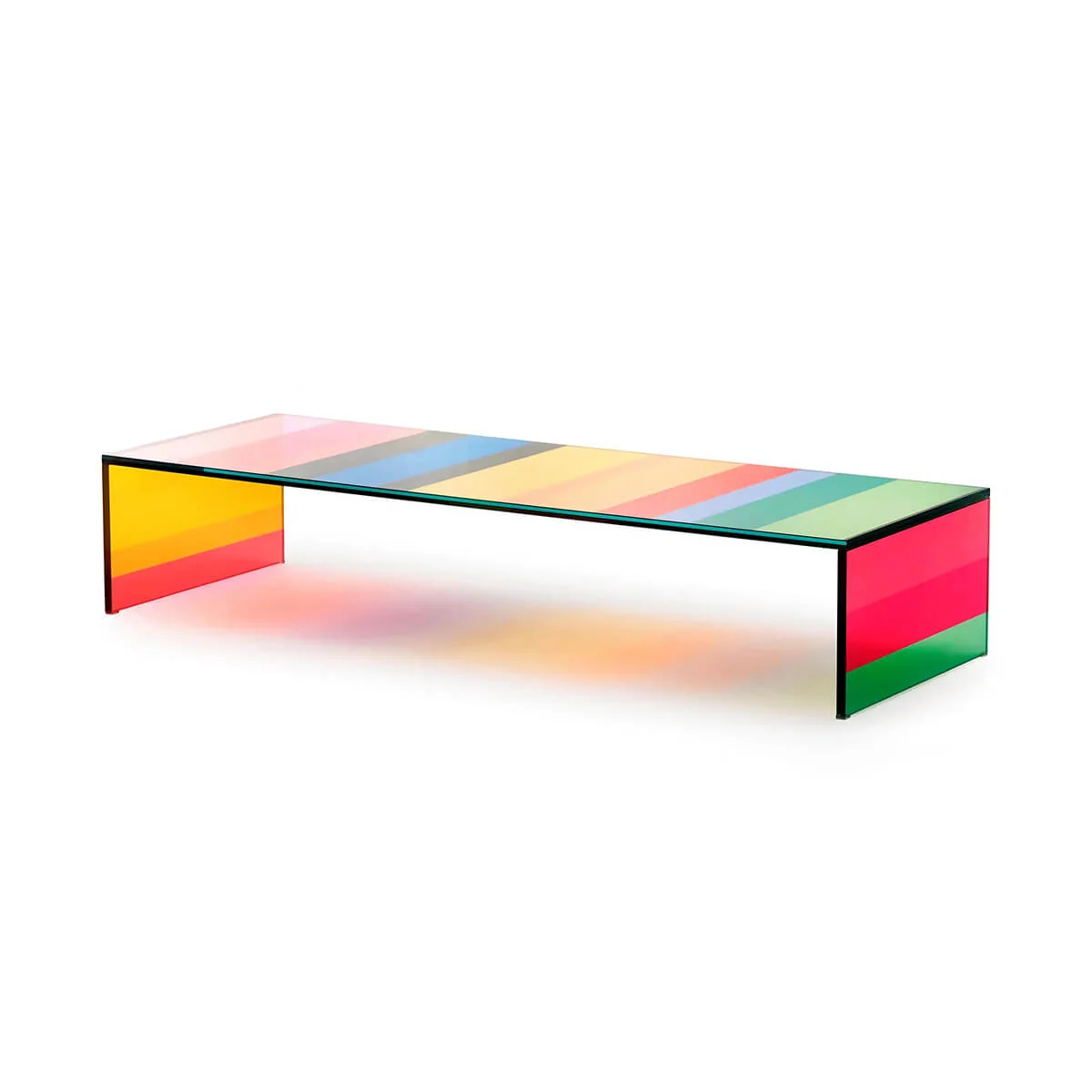
Piero Lissoni conceived the Dark Side of the Moon as an exercise in material transformation. Glass, ordinarily understood as a singular, transparent plane, is here reconsidered entirely.
Through a sophisticated layering process, strips of glass in varied qualities and widths are overlapped and assembled into the table's surface. The result is a top that shifts across an almost infinite gradation of tone, depth, and translucency, depending on light, angle, and time of day. No two moments of observation are quite the same.
- Low table profile with two glued sides sharing the character of the top
- Glass strips of differing qualities and widths, laminated and assembled
- Surface reads with a syncopated, rhythmic depth across varying light conditions
Glas Italia has long positioned glass not as a neutral material but as the primary expressive medium of a piece. This table is among the most considered expressions of that philosophy, a object that holds its own as both furniture and form.
More Images


The Dark Side of the Moon Table
Piero Lissoni conceived the Dark Side of the Moon as an exercise in material transformation. Glass, ordinarily understood as a singular, transparent plane, is here reconsidered entirely.
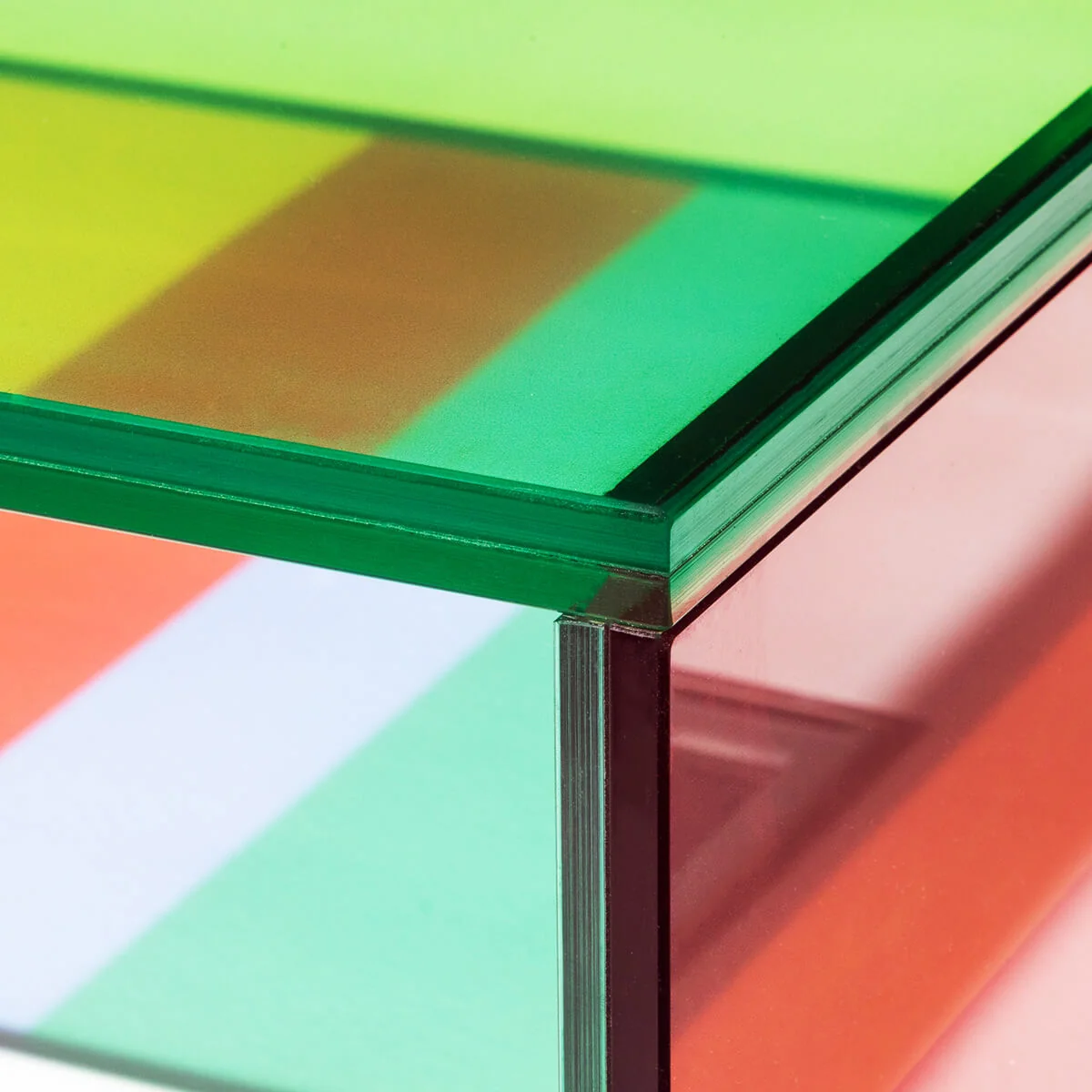
Through a sophisticated layering process, strips of glass in varied qualities and widths are overlapped and assembled into the table's surface. The result is a top that shifts across an almost infinite gradation of tone, depth, and translucency, depending on light, angle, and time of day. No two moments of observation are quite the same.
- Low table profile with two glued sides sharing the character of the top
- Glass strips of differing qualities and widths, laminated and assembled
- Surface reads with a syncopated, rhythmic depth across varying light conditions
Glas Italia has long positioned glass not as a neutral material but as the primary expressive medium of a piece. This table is among the most considered expressions of that philosophy, a object that holds its own as both furniture and form.
Product Information
Product Information
Shipping & Returns
Shipping & Returns
Description
Piero Lissoni conceived the Dark Side of the Moon as an exercise in material transformation. Glass, ordinarily understood as a singular, transparent plane, is here reconsidered entirely.
Through a sophisticated layering process, strips of glass in varied qualities and widths are overlapped and assembled into the table's surface. The result is a top that shifts across an almost infinite gradation of tone, depth, and translucency, depending on light, angle, and time of day. No two moments of observation are quite the same.
- Low table profile with two glued sides sharing the character of the top
- Glass strips of differing qualities and widths, laminated and assembled
- Surface reads with a syncopated, rhythmic depth across varying light conditions
Glas Italia has long positioned glass not as a neutral material but as the primary expressive medium of a piece. This table is among the most considered expressions of that philosophy, a object that holds its own as both furniture and form.