Revolving Cabinet
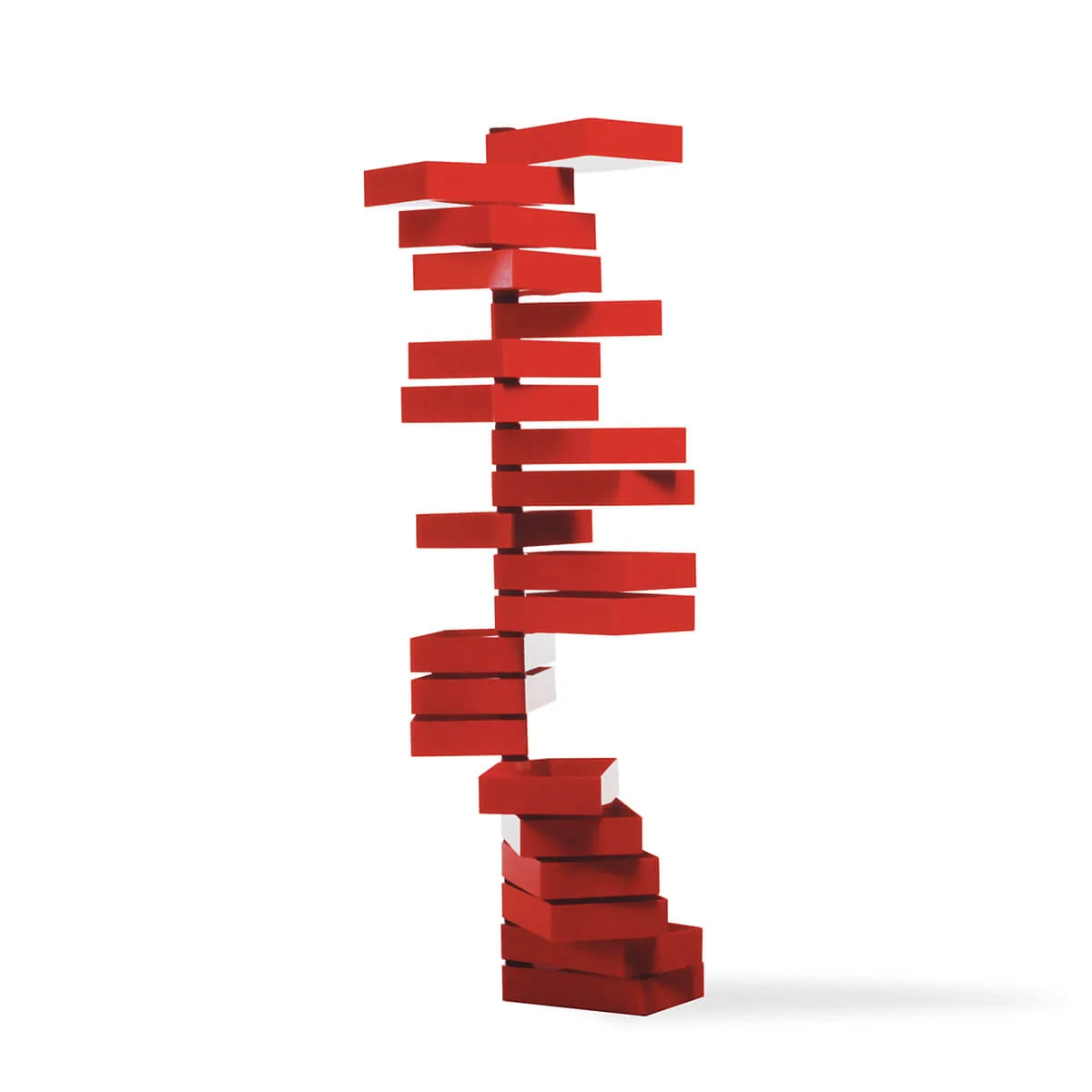
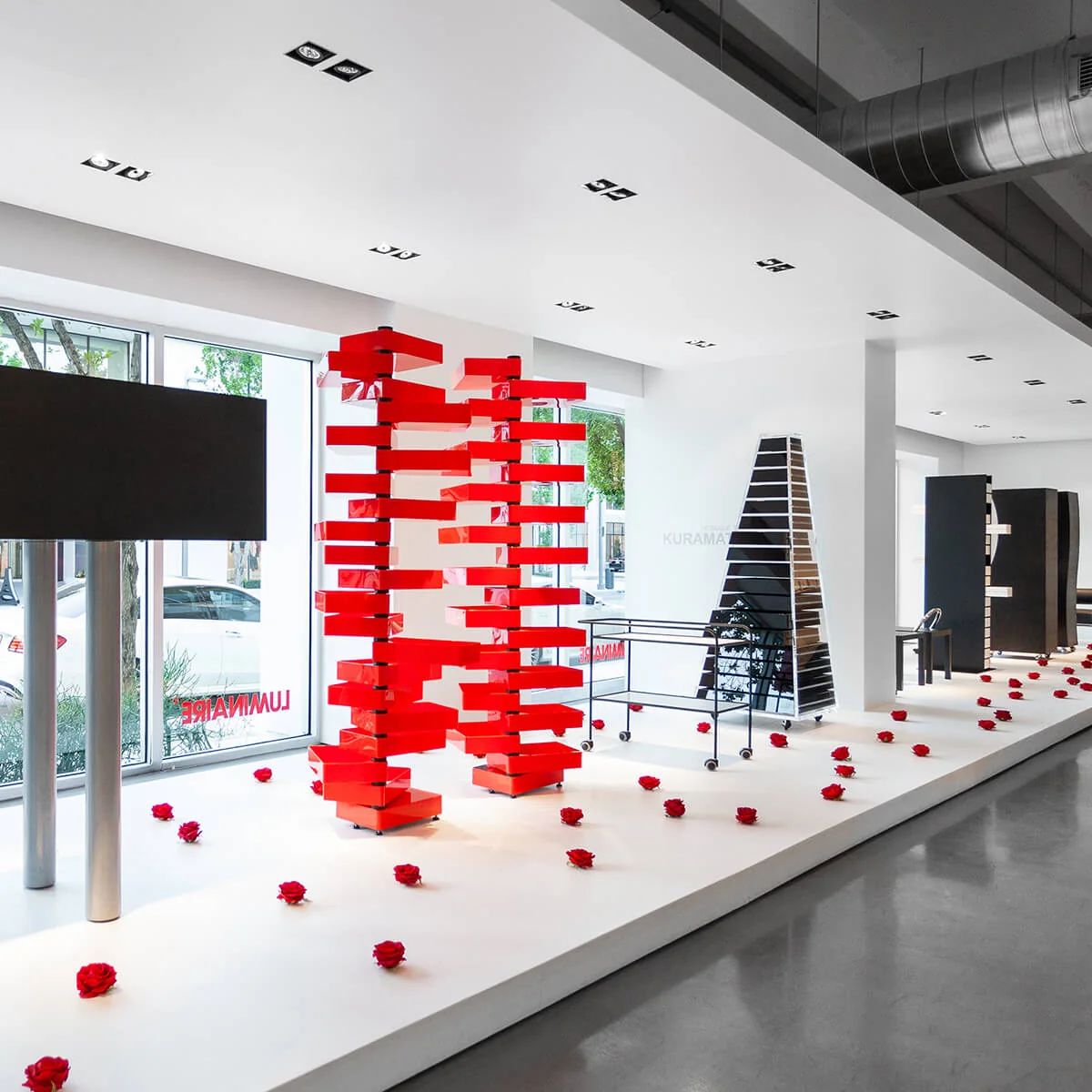
Designed in 1970, the Revolving Cabinet occupies the rare space where furniture becomes sculpture. Twenty polished plastic drawers rotate freely around a central metal column, inviting constant recomposition. No two arrangements are identical. The silhouette shifts with each turn.
Shiro Kuramata was among the most consequential figures in twentieth-century Japanese design, consistently dissolving the boundary between the functional and the poetic. His work drew from architecture, surrealism, and a deeply personal sense of materiality, producing objects that feel as much perceived as used.
The Revolving Cabinet distills that sensibility into a single gesture. A tower of red containers as much about movement and perception as about storage. Produced by Cappellini, it endures as one of the defining objects of postwar design.
More Images



Revolving Cabinet
Designed in 1970, the Revolving Cabinet occupies the rare space where furniture becomes sculpture. Twenty polished plastic drawers rotate freely around a central metal column, inviting constant recomposition. No two arrangements are identical. The silhouette shifts with each turn.
Shiro Kuramata was among the most consequential figures in twentieth-century Japanese design, consistently dissolving the boundary between the functional and the poetic. His work drew from architecture, surrealism, and a deeply personal sense of materiality, producing objects that feel as much perceived as used.
The Revolving Cabinet distills that sensibility into a single gesture. A tower of red containers as much about movement and perception as about storage. Produced by Cappellini, it endures as one of the defining objects of postwar design.
Product Information
Product Information
Shipping & Returns
Shipping & Returns
Description
Designed in 1970, the Revolving Cabinet occupies the rare space where furniture becomes sculpture. Twenty polished plastic drawers rotate freely around a central metal column, inviting constant recomposition. No two arrangements are identical. The silhouette shifts with each turn.
Shiro Kuramata was among the most consequential figures in twentieth-century Japanese design, consistently dissolving the boundary between the functional and the poetic. His work drew from architecture, surrealism, and a deeply personal sense of materiality, producing objects that feel as much perceived as used.
The Revolving Cabinet distills that sensibility into a single gesture. A tower of red containers as much about movement and perception as about storage. Produced by Cappellini, it endures as one of the defining objects of postwar design.