LC6 Table
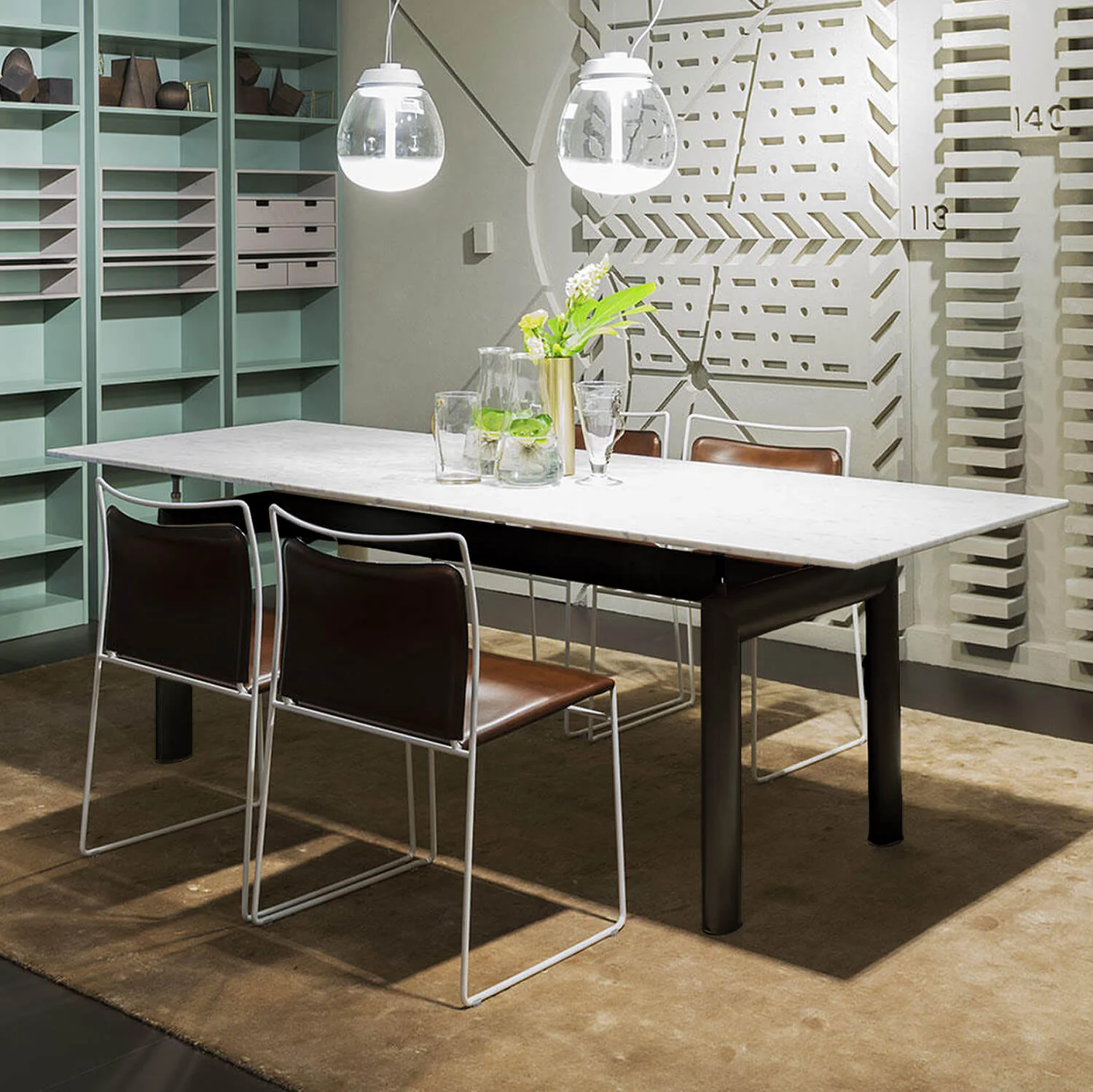
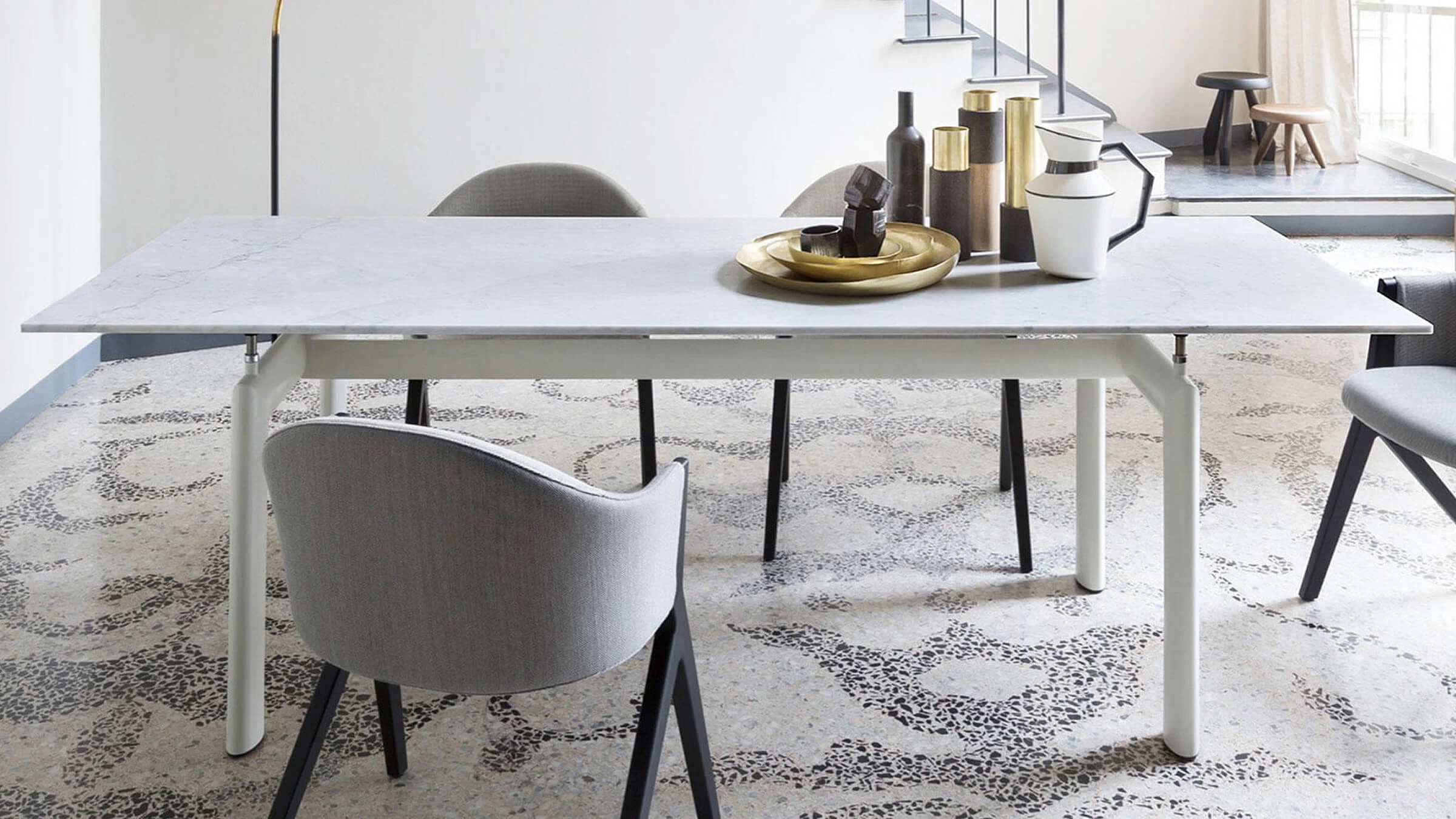
Designed by Le Corbusier and produced by Cassina, the LC6 is one of the defining objects of twentieth-century modernism. Its central proposition is architectural: a deliberate, visible separation between the load-bearing base and the surface it supports, structure and plane rendered as two autonomous elements in considered dialogue.
The heavy tubular steel base is enameled in Le Corbusier's own color palette, each hue drawn from his broader chromatic theory. Four adjustable middle supports mediate the relationship between base and top, holding the slim rectangular surface in precise tension above its frame.
- Base in enameled tubular steel, available in six colors: black, light blue, grey, green, mud, and ivory
- Top options include crystal glass, textured glass, natural marble, or veneered wood
- Adjustable supports allow fine calibration between base and surface plane
- Produced by Cassina under license from the Le Corbusier Foundation
First conceived in 1928 as part of Le Corbusier's furnishing program for Villa Church, the LC6 continues to anchor dining rooms and workspaces where architecture and interior are held to the same standard.
Original: $7,516.00
-65%$7,516.00
$2,630.60More Images



LC6 Table
Designed by Le Corbusier and produced by Cassina, the LC6 is one of the defining objects of twentieth-century modernism. Its central proposition is architectural: a deliberate, visible separation between the load-bearing base and the surface it supports, structure and plane rendered as two autonomous elements in considered dialogue.
The heavy tubular steel base is enameled in Le Corbusier's own color palette, each hue drawn from his broader chromatic theory. Four adjustable middle supports mediate the relationship between base and top, holding the slim rectangular surface in precise tension above its frame.
- Base in enameled tubular steel, available in six colors: black, light blue, grey, green, mud, and ivory
- Top options include crystal glass, textured glass, natural marble, or veneered wood
- Adjustable supports allow fine calibration between base and surface plane
- Produced by Cassina under license from the Le Corbusier Foundation
First conceived in 1928 as part of Le Corbusier's furnishing program for Villa Church, the LC6 continues to anchor dining rooms and workspaces where architecture and interior are held to the same standard.
Product Information
Product Information
Shipping & Returns
Shipping & Returns
Description
Designed by Le Corbusier and produced by Cassina, the LC6 is one of the defining objects of twentieth-century modernism. Its central proposition is architectural: a deliberate, visible separation between the load-bearing base and the surface it supports, structure and plane rendered as two autonomous elements in considered dialogue.
The heavy tubular steel base is enameled in Le Corbusier's own color palette, each hue drawn from his broader chromatic theory. Four adjustable middle supports mediate the relationship between base and top, holding the slim rectangular surface in precise tension above its frame.
- Base in enameled tubular steel, available in six colors: black, light blue, grey, green, mud, and ivory
- Top options include crystal glass, textured glass, natural marble, or veneered wood
- Adjustable supports allow fine calibration between base and surface plane
- Produced by Cassina under license from the Le Corbusier Foundation
First conceived in 1928 as part of Le Corbusier's furnishing program for Villa Church, the LC6 continues to anchor dining rooms and workspaces where architecture and interior are held to the same standard.