Hiroshima Dining Chair
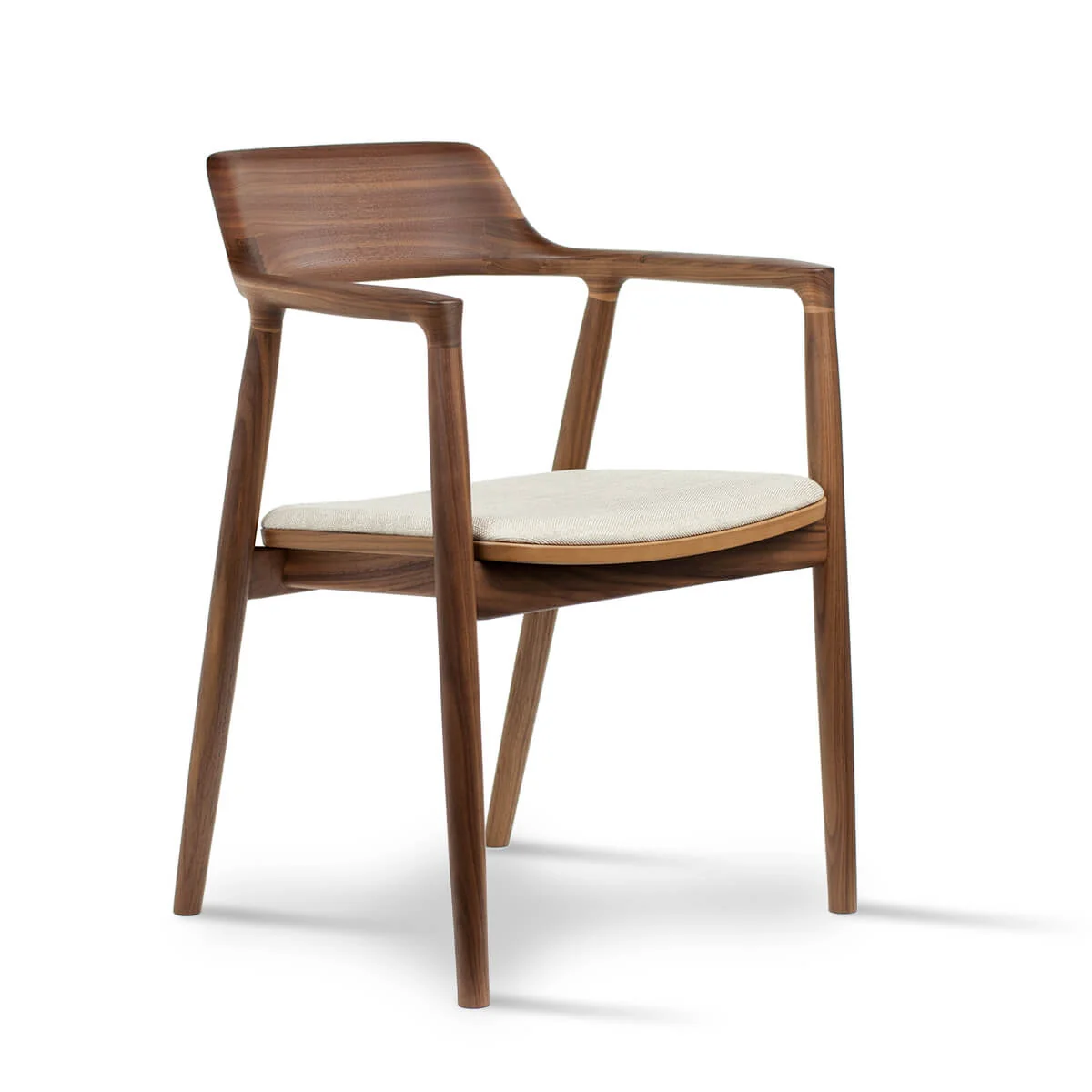
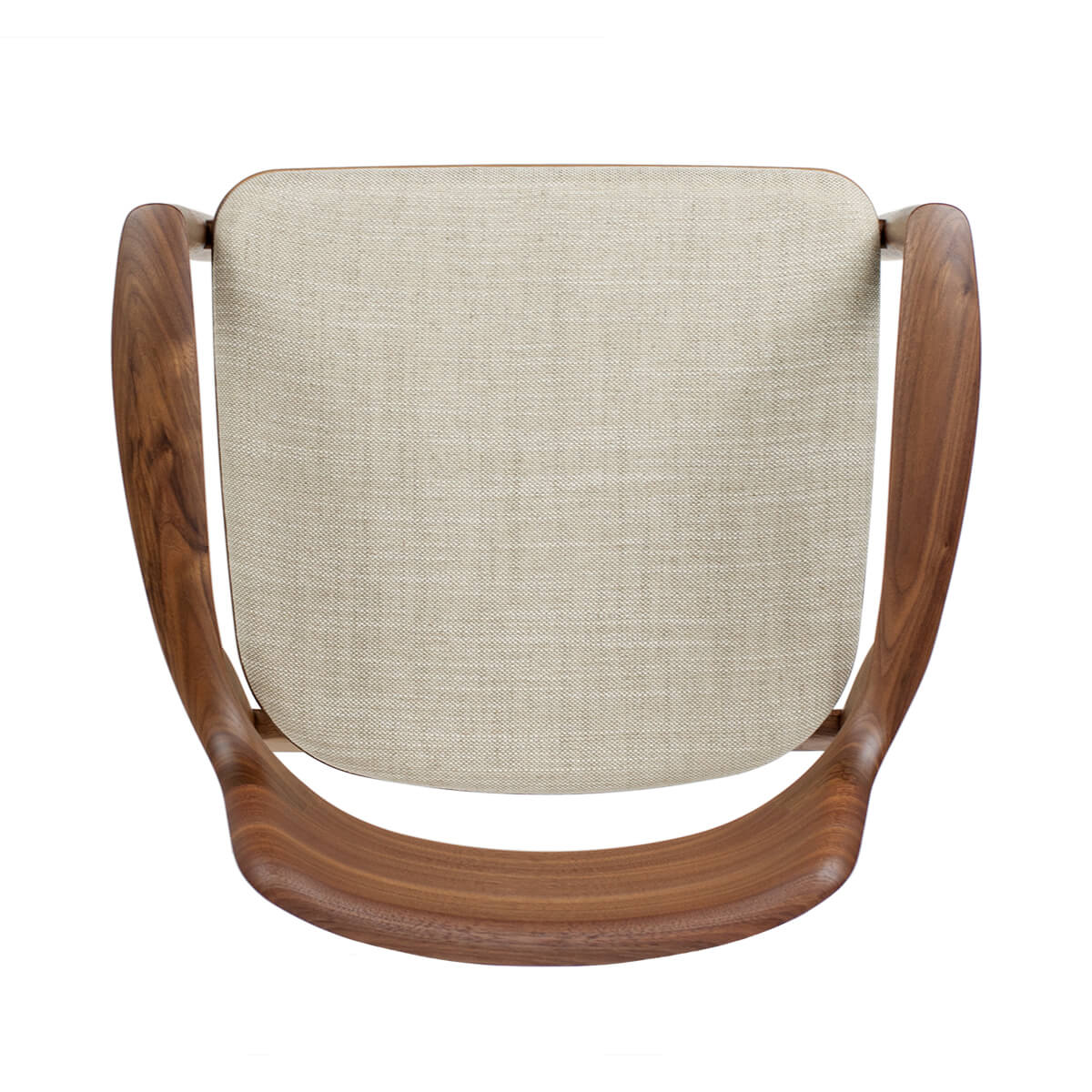
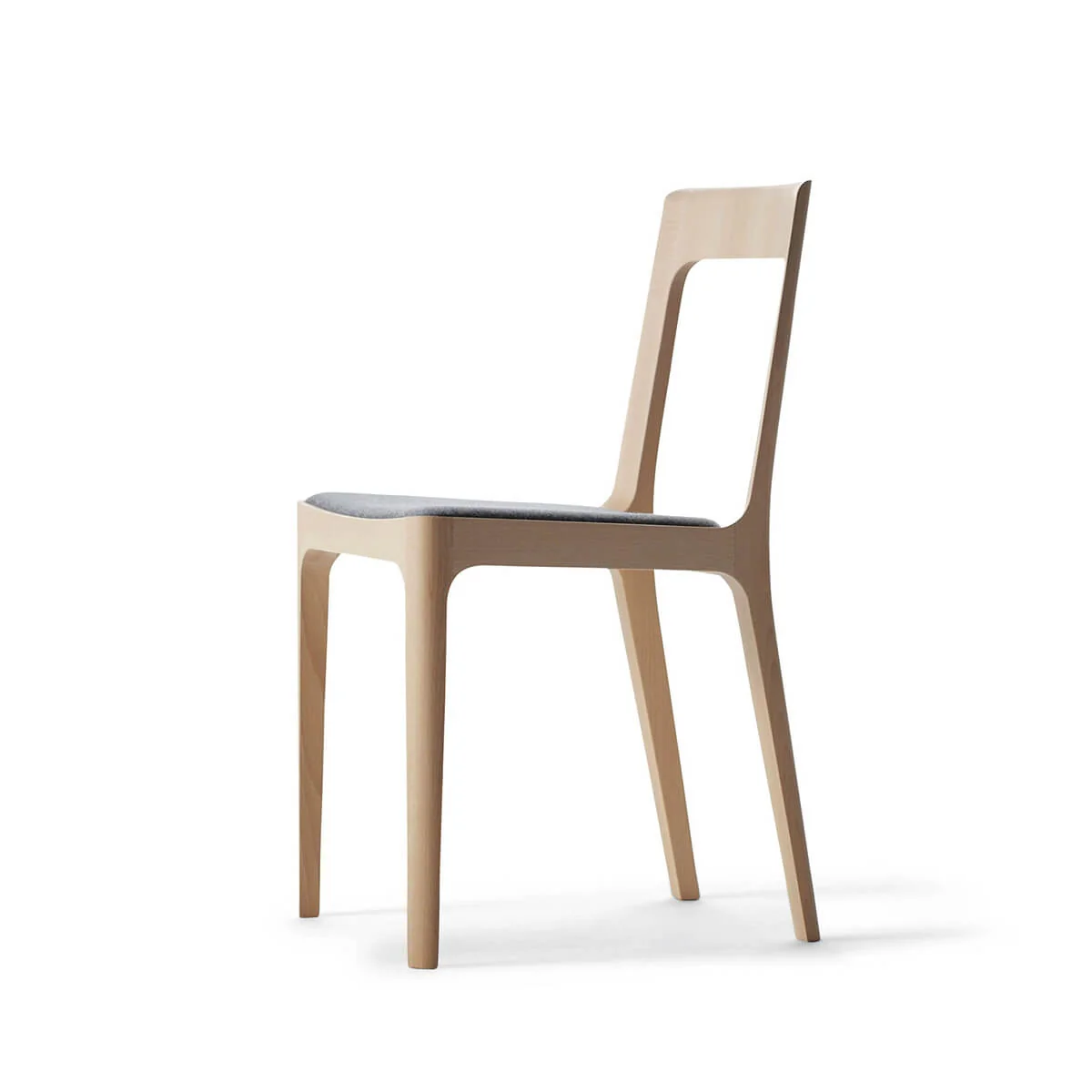
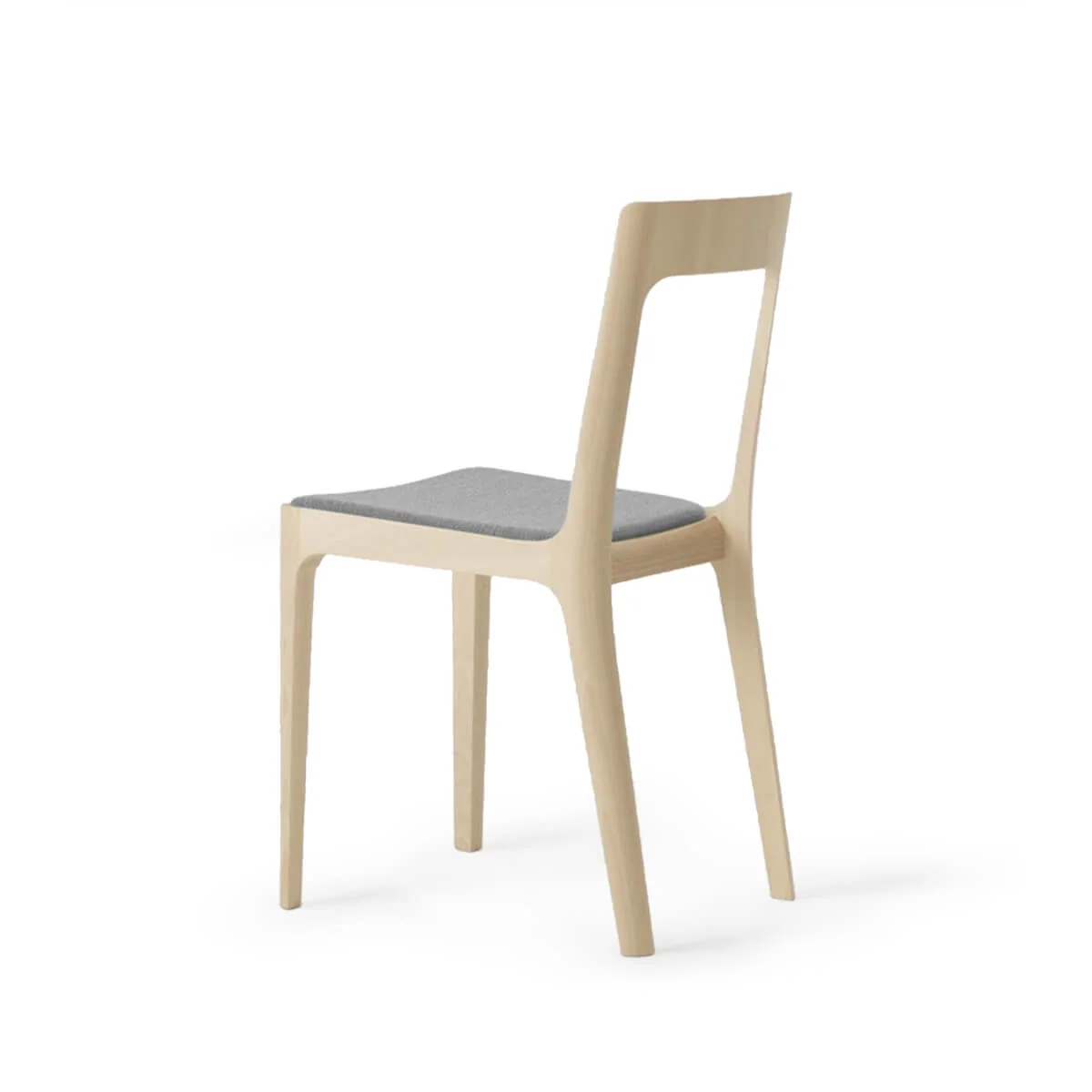
Naoto Fukasawa conceived the Hiroshima collection as an act of quiet observation. The chair takes its form from the way people actually inhabit a seat: the body leaning, the arm resting, the wood responding to both with a single continuous curve from backrest to armrest. Nothing is forced. The geometry arrives at its conclusion without announcement.
Maruni's woodworkers in Hiroshima execute this vision in solid beech or solid oak, species chosen for the way they receive light across a tapered edge. The chamfered arms and seat frame catch and release shadow in a manner that reveals the wood's depth rather than merely its surface.
- Solid beech or solid oak construction
- Continuous back-to-arm curve, shaped to the resting body
- Chamfered edges that modulate light and shadow
- Proportions suited to extended use at dining table or desk
- Crafted in Hiroshima, Japan by Maruni's specialist woodworkers
Fukasawa's practice is rooted in what he calls "design dissolving into behavior." The Hiroshima chair is perhaps the clearest expression of that idea: a form so precisely calibrated to human gesture that it recedes into naturalness. The result is an object that feels less designed than discovered.
Original: $927.60
-65%$927.60
$324.66More Images


Hiroshima Dining Chair
Naoto Fukasawa conceived the Hiroshima collection as an act of quiet observation. The chair takes its form from the way people actually inhabit a seat: the body leaning, the arm resting, the wood responding to both with a single continuous curve from backrest to armrest. Nothing is forced. The geometry arrives at its conclusion without announcement.
Maruni's woodworkers in Hiroshima execute this vision in solid beech or solid oak, species chosen for the way they receive light across a tapered edge. The chamfered arms and seat frame catch and release shadow in a manner that reveals the wood's depth rather than merely its surface.
- Solid beech or solid oak construction
- Continuous back-to-arm curve, shaped to the resting body
- Chamfered edges that modulate light and shadow
- Proportions suited to extended use at dining table or desk
- Crafted in Hiroshima, Japan by Maruni's specialist woodworkers
Fukasawa's practice is rooted in what he calls "design dissolving into behavior." The Hiroshima chair is perhaps the clearest expression of that idea: a form so precisely calibrated to human gesture that it recedes into naturalness. The result is an object that feels less designed than discovered.
Product Information
Product Information
Shipping & Returns
Shipping & Returns
Description
Naoto Fukasawa conceived the Hiroshima collection as an act of quiet observation. The chair takes its form from the way people actually inhabit a seat: the body leaning, the arm resting, the wood responding to both with a single continuous curve from backrest to armrest. Nothing is forced. The geometry arrives at its conclusion without announcement.
Maruni's woodworkers in Hiroshima execute this vision in solid beech or solid oak, species chosen for the way they receive light across a tapered edge. The chamfered arms and seat frame catch and release shadow in a manner that reveals the wood's depth rather than merely its surface.
- Solid beech or solid oak construction
- Continuous back-to-arm curve, shaped to the resting body
- Chamfered edges that modulate light and shadow
- Proportions suited to extended use at dining table or desk
- Crafted in Hiroshima, Japan by Maruni's specialist woodworkers
Fukasawa's practice is rooted in what he calls "design dissolving into behavior." The Hiroshima chair is perhaps the clearest expression of that idea: a form so precisely calibrated to human gesture that it recedes into naturalness. The result is an object that feels less designed than discovered.