Chandigarh Tray Collection
In the 1950s, Le Corbusier pressed symbolic bas-reliefs into the concrete walls of Chandigarh, the city he designed in northern India and now a UNESCO World Heritage Site. Three of those symbols, each sketched by the architect in 1956, now exist in a new form: pure, unglazed porcelain, handcrafted by Richard Ginori.
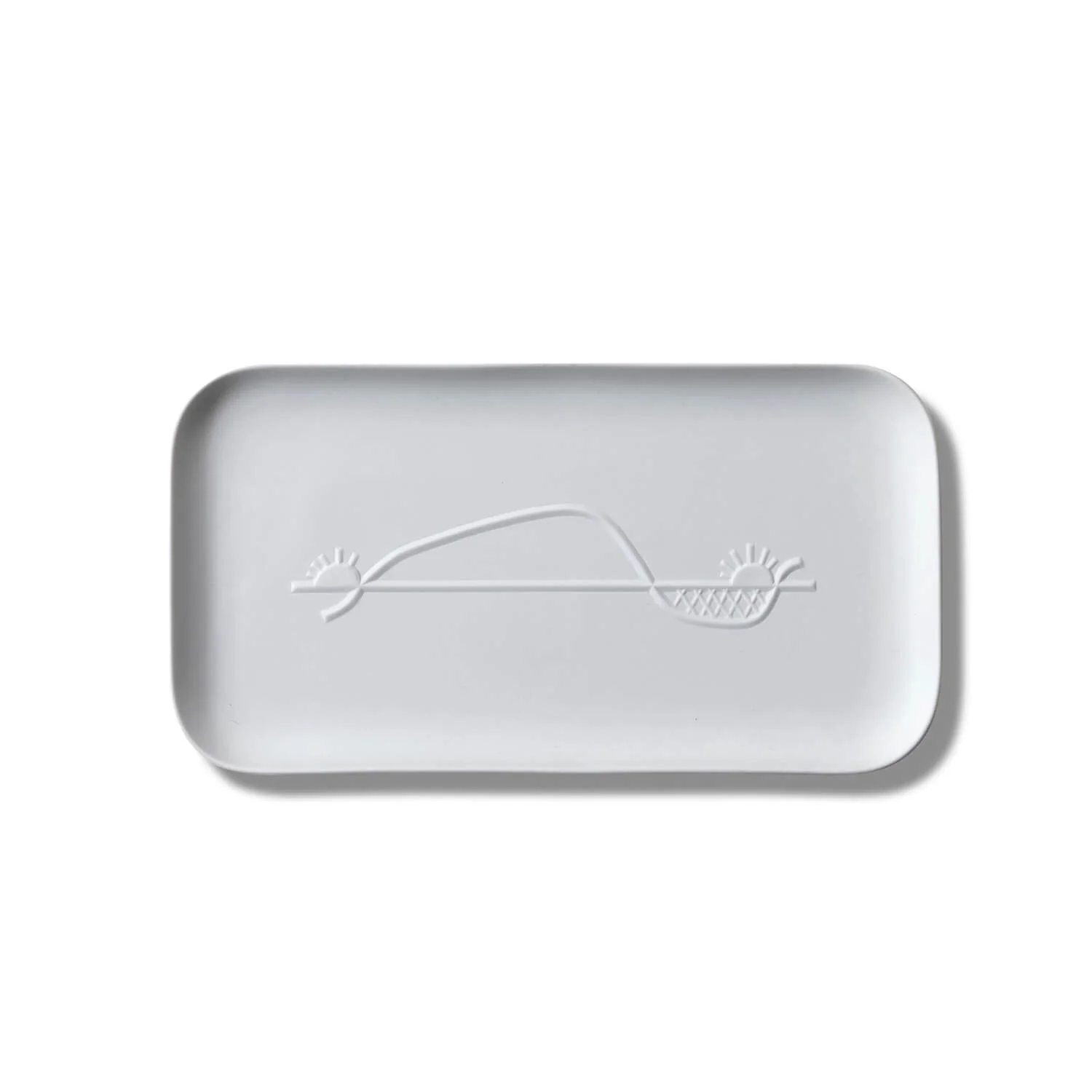
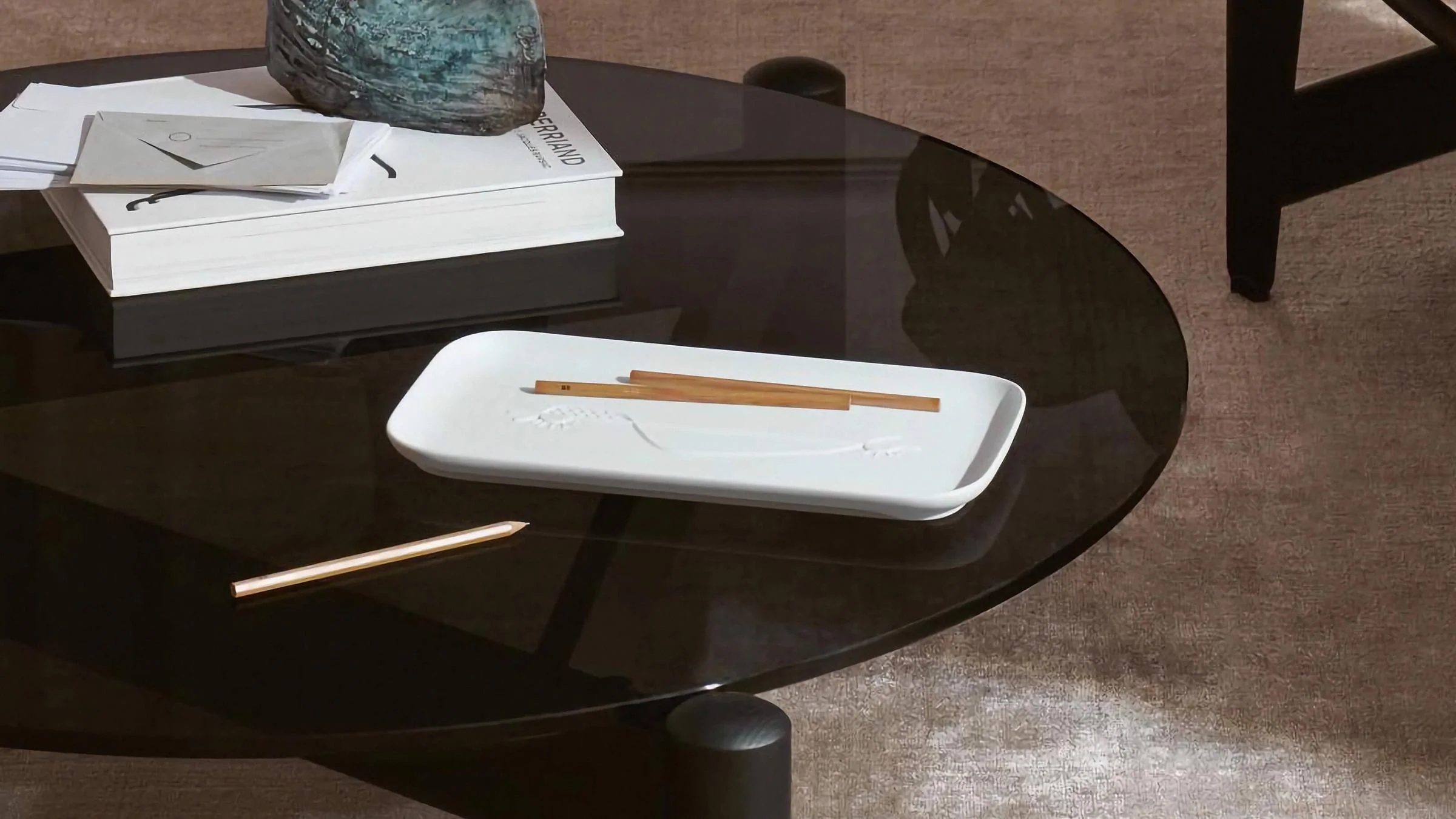
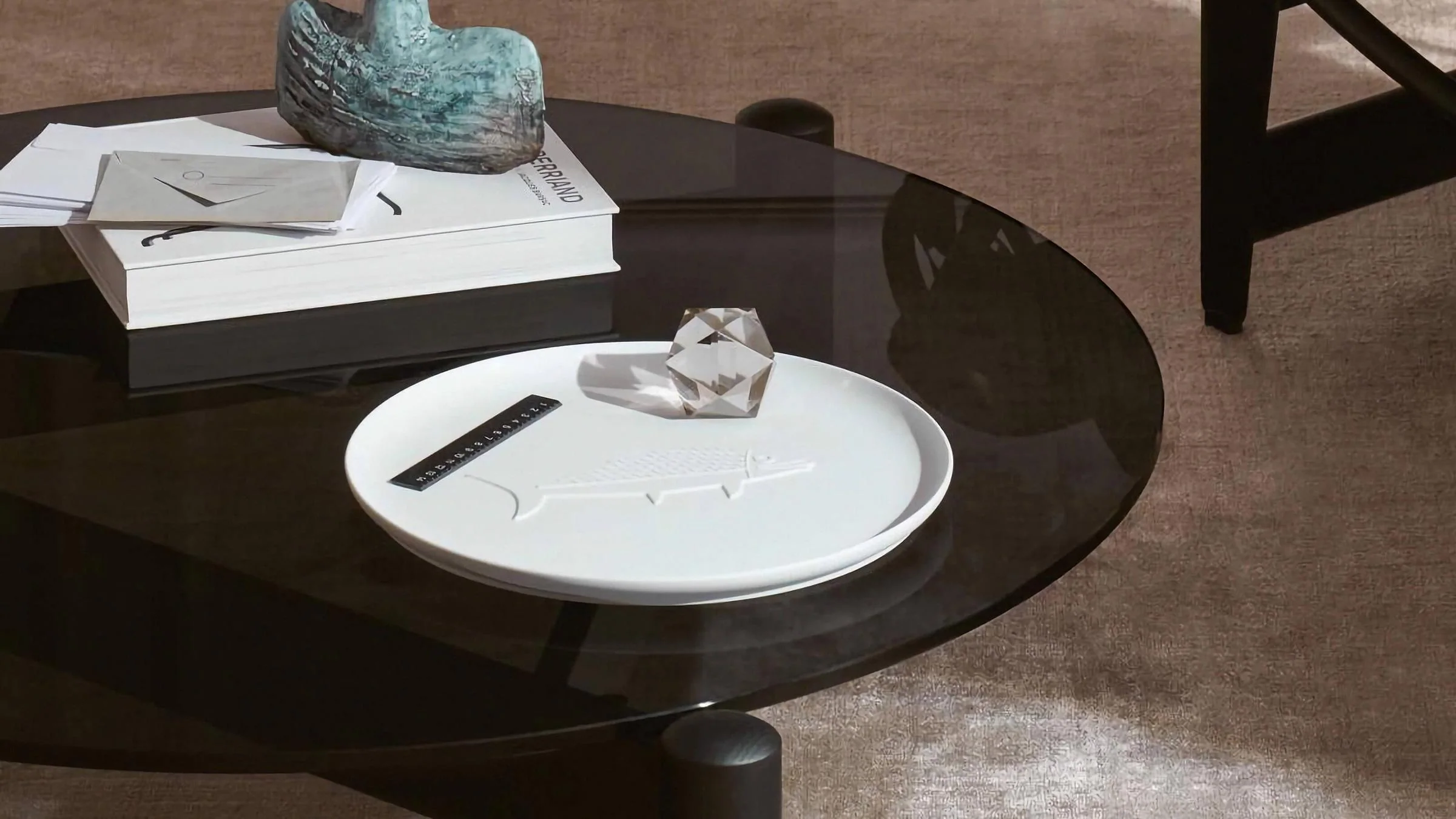
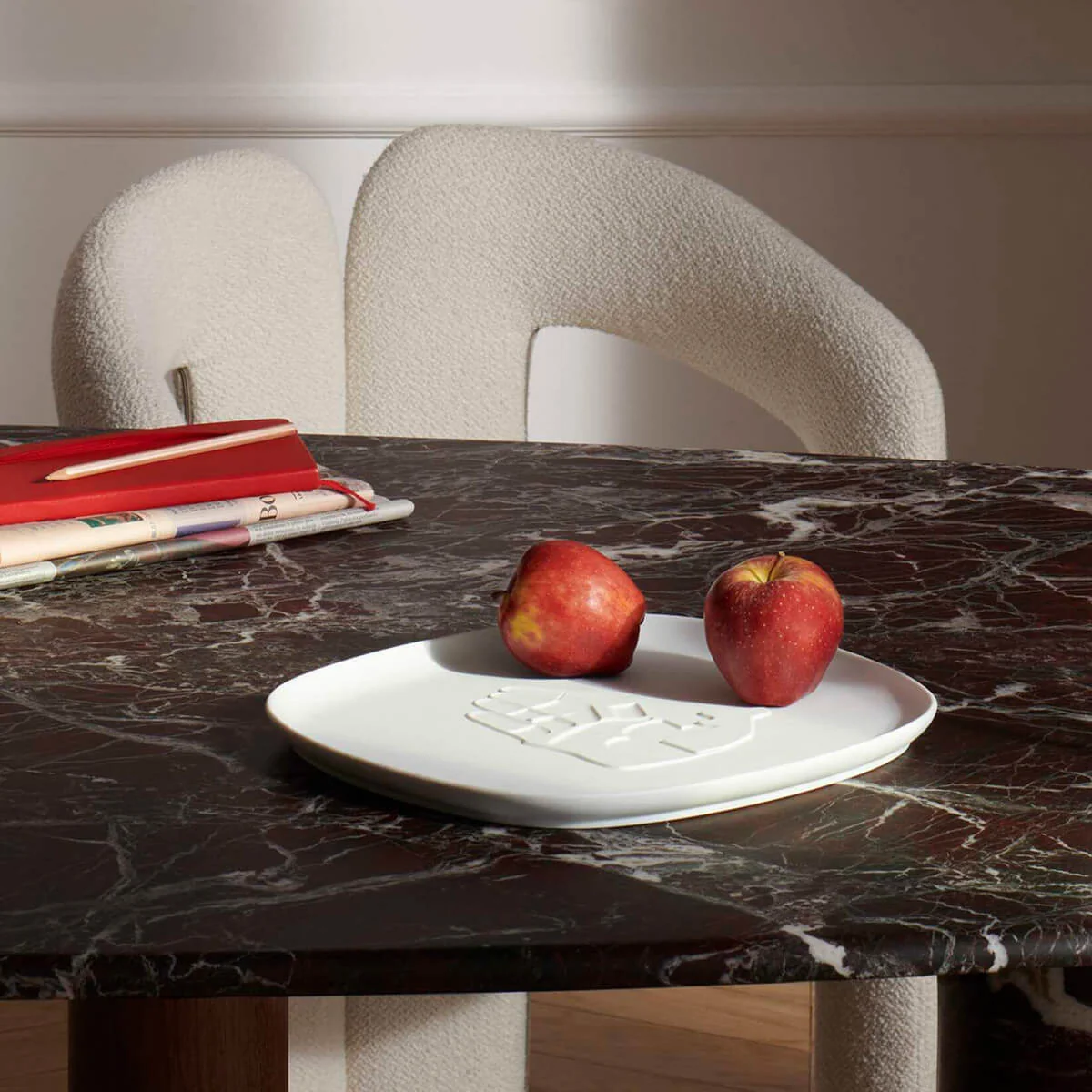
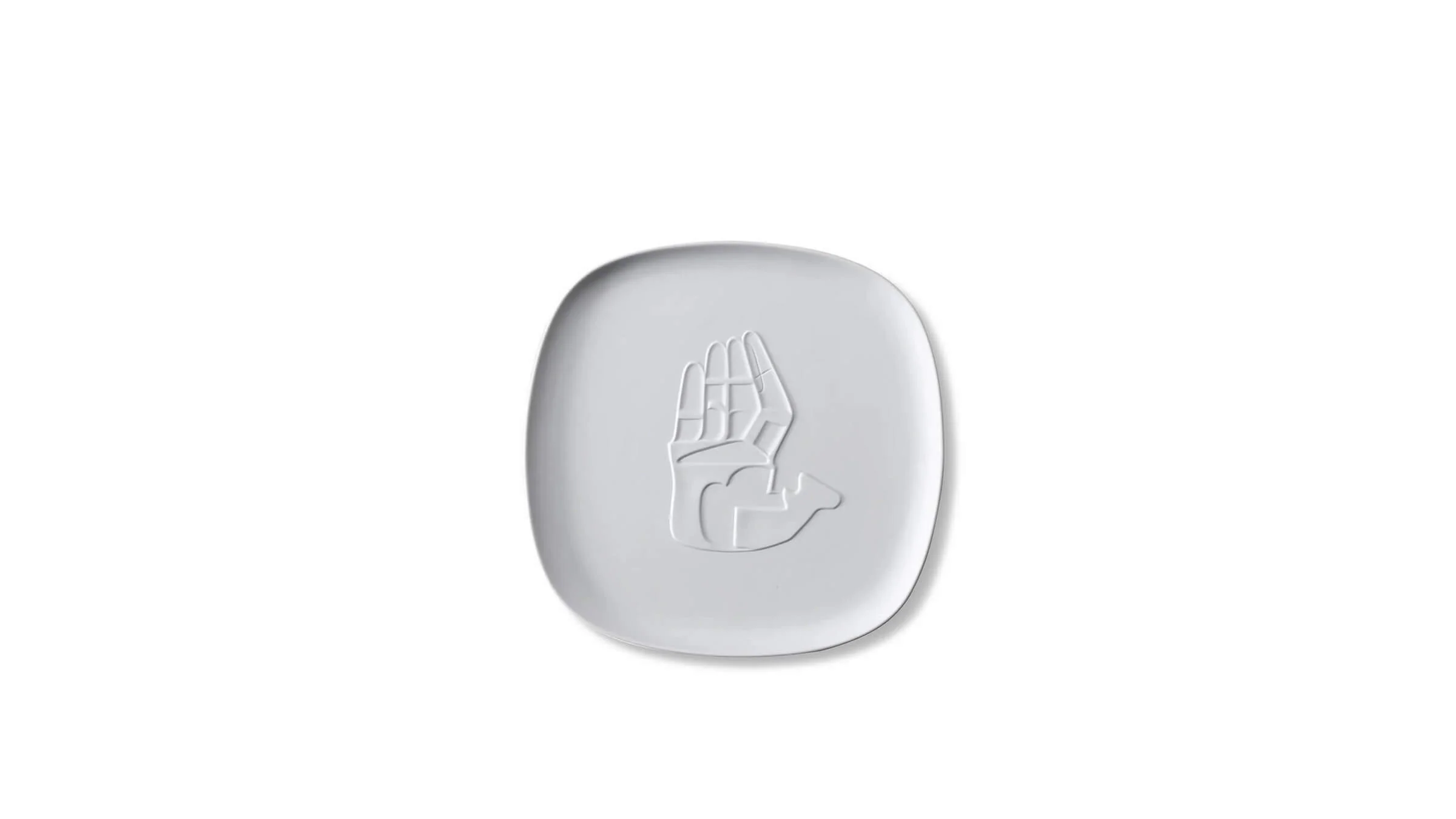
The open hand, an emblem of peace, appears on the square tray with rounded corners. The fish inhabits the round tray. The arc of the sun defines the rectangular form. The same iconographic vocabulary appears at Marseille's Unité d'Habitation, pressed into béton brut as sculptures moulées, figurative marks drawn from Le Corbusier's deeply personal symbolic language.
Produced in collaboration with the Le Corbusier Foundation, each tray carries the weight of that architectural archive. The unglazed porcelain surface holds the relief with an almost geological quality, closer to cast concrete than conventional ceramics.
- Square tray with rounded corners: the open hand
- Round tray: the fish
- Rectangular tray: the movement of the sun
- Handcrafted by Richard Ginori in unglazed porcelain
- Produced under license from the Le Corbusier Foundation
Original: $467.50
-65%$467.50
$163.62More Images








Chandigarh Tray Collection
In the 1950s, Le Corbusier pressed symbolic bas-reliefs into the concrete walls of Chandigarh, the city he designed in northern India and now a UNESCO World Heritage Site. Three of those symbols, each sketched by the architect in 1956, now exist in a new form: pure, unglazed porcelain, handcrafted by Richard Ginori.
The open hand, an emblem of peace, appears on the square tray with rounded corners. The fish inhabits the round tray. The arc of the sun defines the rectangular form. The same iconographic vocabulary appears at Marseille's Unité d'Habitation, pressed into béton brut as sculptures moulées, figurative marks drawn from Le Corbusier's deeply personal symbolic language.
Produced in collaboration with the Le Corbusier Foundation, each tray carries the weight of that architectural archive. The unglazed porcelain surface holds the relief with an almost geological quality, closer to cast concrete than conventional ceramics.
- Square tray with rounded corners: the open hand
- Round tray: the fish
- Rectangular tray: the movement of the sun
- Handcrafted by Richard Ginori in unglazed porcelain
- Produced under license from the Le Corbusier Foundation
Product Information
Product Information
Shipping & Returns
Shipping & Returns
Description
In the 1950s, Le Corbusier pressed symbolic bas-reliefs into the concrete walls of Chandigarh, the city he designed in northern India and now a UNESCO World Heritage Site. Three of those symbols, each sketched by the architect in 1956, now exist in a new form: pure, unglazed porcelain, handcrafted by Richard Ginori.
The open hand, an emblem of peace, appears on the square tray with rounded corners. The fish inhabits the round tray. The arc of the sun defines the rectangular form. The same iconographic vocabulary appears at Marseille's Unité d'Habitation, pressed into béton brut as sculptures moulées, figurative marks drawn from Le Corbusier's deeply personal symbolic language.
Produced in collaboration with the Le Corbusier Foundation, each tray carries the weight of that architectural archive. The unglazed porcelain surface holds the relief with an almost geological quality, closer to cast concrete than conventional ceramics.
- Square tray with rounded corners: the open hand
- Round tray: the fish
- Rectangular tray: the movement of the sun
- Handcrafted by Richard Ginori in unglazed porcelain
- Produced under license from the Le Corbusier Foundation