Capitol Complex Chair
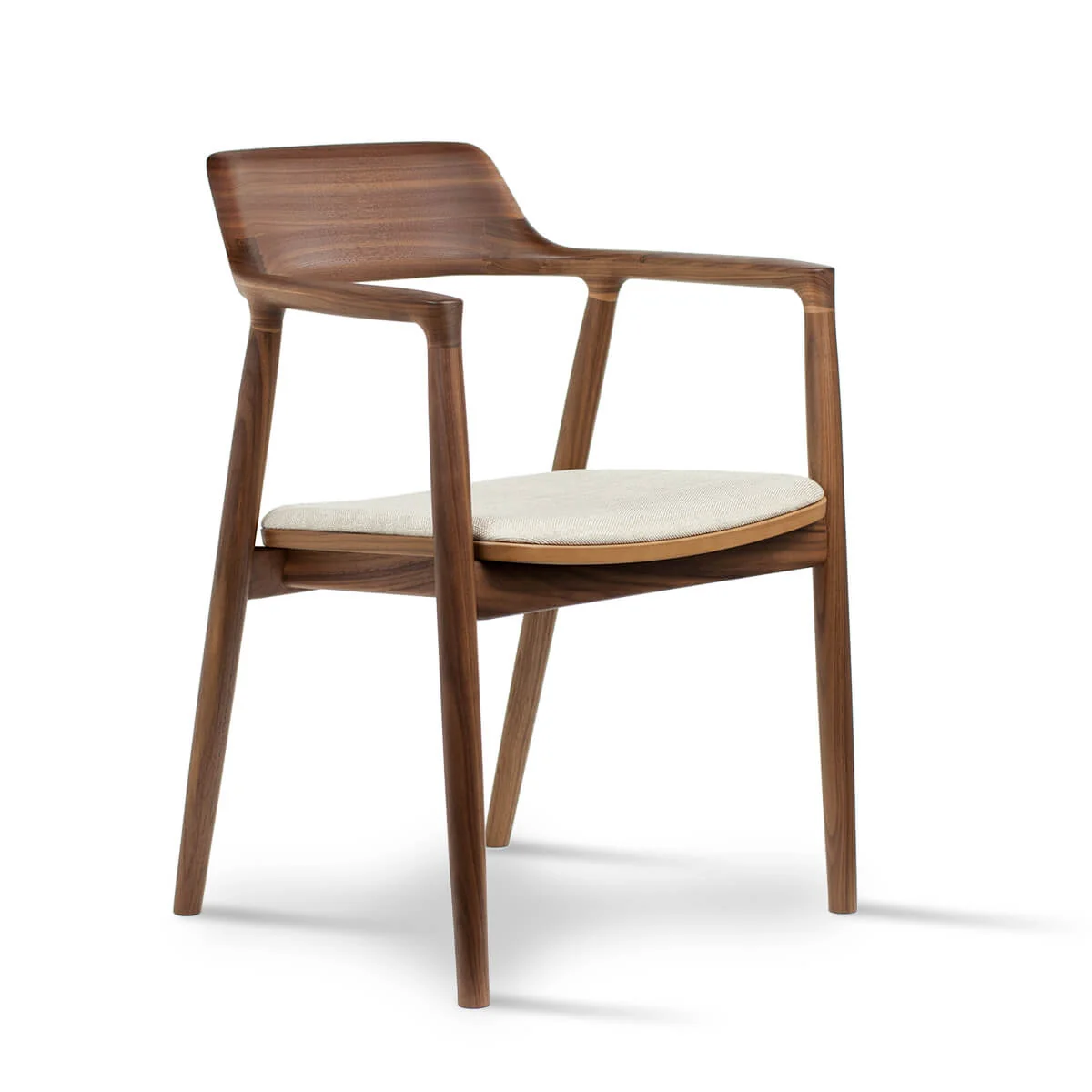
Designed for the Secretariat building of Chandigarh's Capitol Complex, this chair carries the full weight of one of the twentieth century's most ambitious civic undertakings. Pierre Jeanneret developed his furniture vocabulary in direct response to the region, working with solid teak and locally sourced woven cane, materials that aged honestly under the Indian climate and bore the marks of daily institutional use.
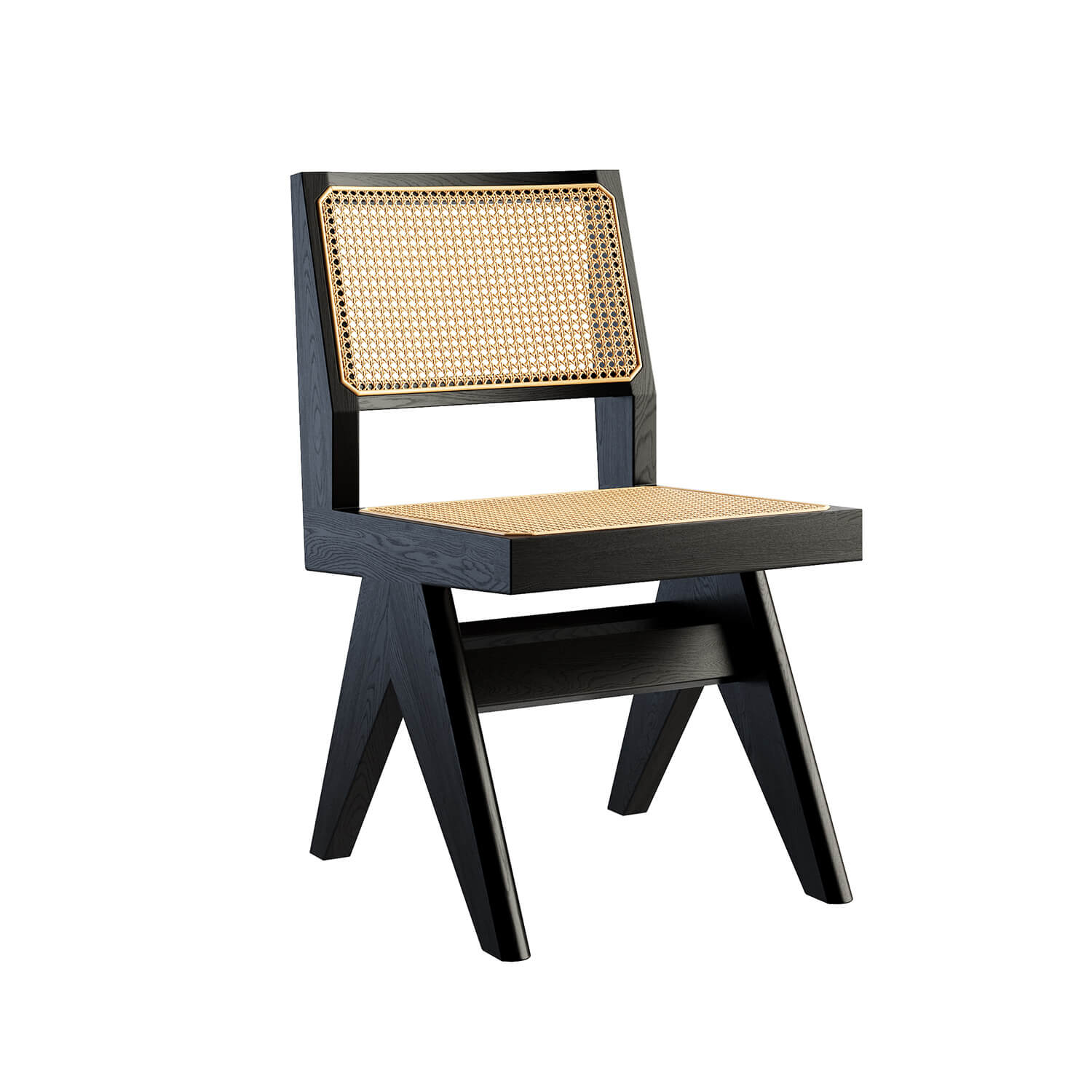
The chair's defining gesture is the inverted-V sidebar, a structural signature that recurs throughout Jeanneret's Chandigarh output. In this armless variant, the V-forms are abbreviated, drawing attention instead to the dialogue between seat and backrest: woven cane panels held within a teak frame, open and precise in equal measure.
- Reissued by Cassina with faithful attention to Jeanneret's original proportions
- Solid teak construction with Viennese woven cane seat and back
- Part of Cassina's I Maestri collection, dedicated to canonical works of modern architecture
- Suited to both residential and institutional environments
Jeanneret served as Le Corbusier's on-the-ground collaborator in Chandigarh from 1951 onward, overseeing construction and designing the furnishings that would inhabit the city's civic buildings. His chairs, tables, and desks have since become objects of deep scholarly and curatorial interest, recognized as an inseparable part of the Capitol Complex's architectural identity.
Original: $2,513.50
-65%$2,513.50
$879.72More Images


Capitol Complex Chair
Designed for the Secretariat building of Chandigarh's Capitol Complex, this chair carries the full weight of one of the twentieth century's most ambitious civic undertakings. Pierre Jeanneret developed his furniture vocabulary in direct response to the region, working with solid teak and locally sourced woven cane, materials that aged honestly under the Indian climate and bore the marks of daily institutional use.
The chair's defining gesture is the inverted-V sidebar, a structural signature that recurs throughout Jeanneret's Chandigarh output. In this armless variant, the V-forms are abbreviated, drawing attention instead to the dialogue between seat and backrest: woven cane panels held within a teak frame, open and precise in equal measure.
- Reissued by Cassina with faithful attention to Jeanneret's original proportions
- Solid teak construction with Viennese woven cane seat and back
- Part of Cassina's I Maestri collection, dedicated to canonical works of modern architecture
- Suited to both residential and institutional environments
Jeanneret served as Le Corbusier's on-the-ground collaborator in Chandigarh from 1951 onward, overseeing construction and designing the furnishings that would inhabit the city's civic buildings. His chairs, tables, and desks have since become objects of deep scholarly and curatorial interest, recognized as an inseparable part of the Capitol Complex's architectural identity.
Product Information
Product Information
Shipping & Returns
Shipping & Returns
Description
Designed for the Secretariat building of Chandigarh's Capitol Complex, this chair carries the full weight of one of the twentieth century's most ambitious civic undertakings. Pierre Jeanneret developed his furniture vocabulary in direct response to the region, working with solid teak and locally sourced woven cane, materials that aged honestly under the Indian climate and bore the marks of daily institutional use.
The chair's defining gesture is the inverted-V sidebar, a structural signature that recurs throughout Jeanneret's Chandigarh output. In this armless variant, the V-forms are abbreviated, drawing attention instead to the dialogue between seat and backrest: woven cane panels held within a teak frame, open and precise in equal measure.
- Reissued by Cassina with faithful attention to Jeanneret's original proportions
- Solid teak construction with Viennese woven cane seat and back
- Part of Cassina's I Maestri collection, dedicated to canonical works of modern architecture
- Suited to both residential and institutional environments
Jeanneret served as Le Corbusier's on-the-ground collaborator in Chandigarh from 1951 onward, overseeing construction and designing the furnishings that would inhabit the city's civic buildings. His chairs, tables, and desks have since become objects of deep scholarly and curatorial interest, recognized as an inseparable part of the Capitol Complex's architectural identity.