Snoopy Table Lamp
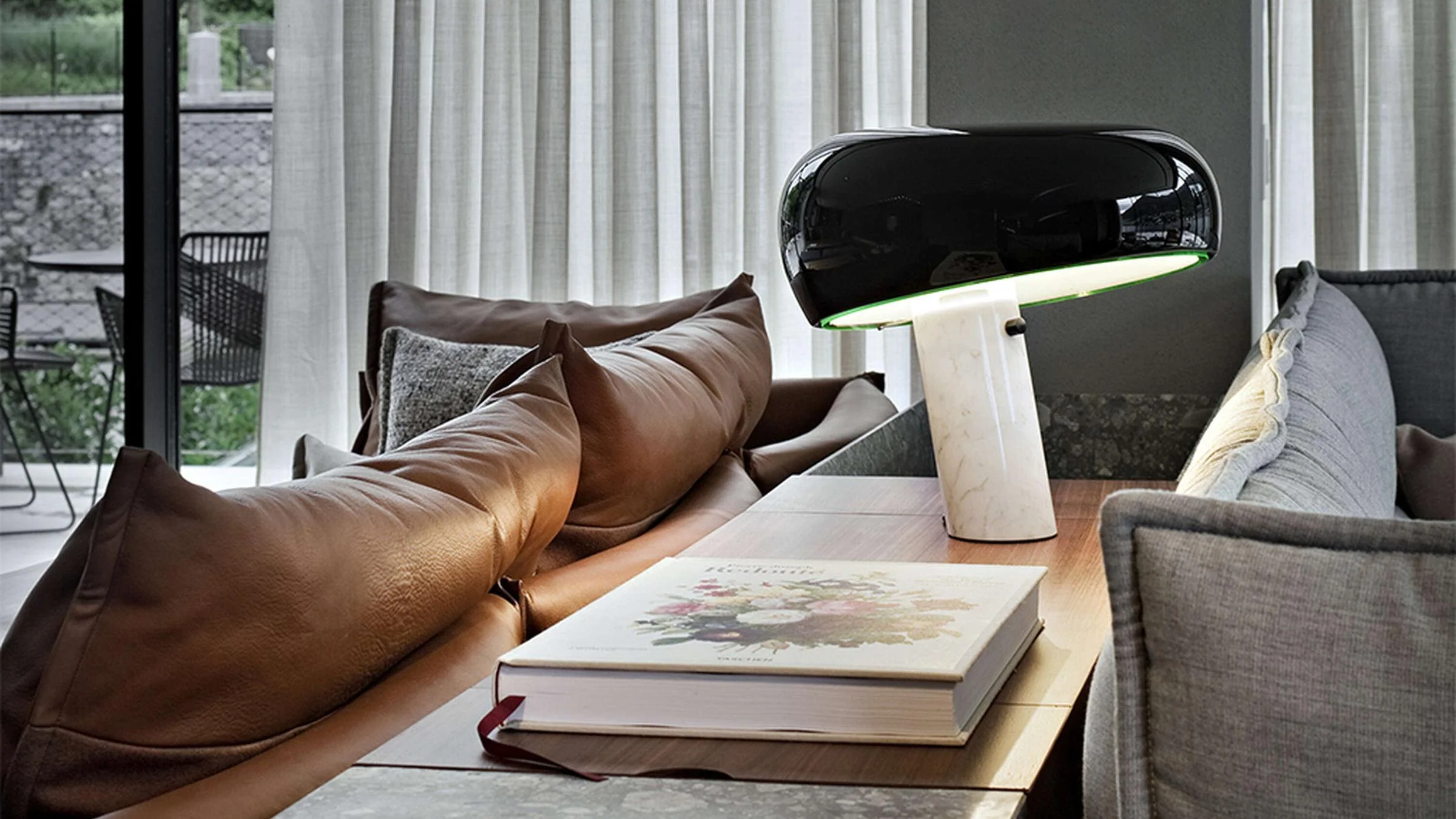
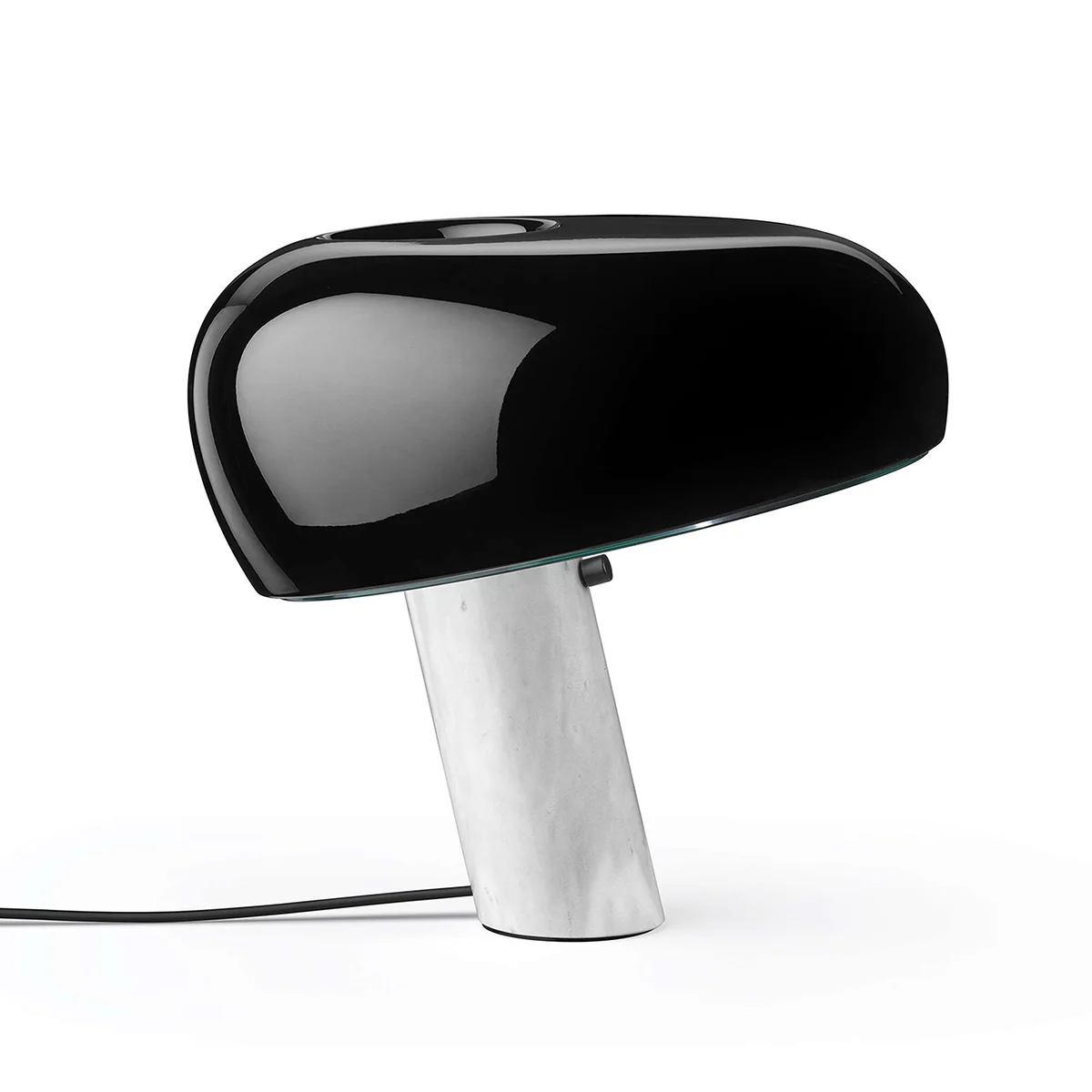
Designed in 1967 by Achille and Pier Giacomo Castiglioni, the Snoopy is one of the most recognized objects in twentieth-century Italian design. Its logic is immediate: a wide, slightly convex opal glass disc softens and directs light downward, while an enameled steel reflector controls spill with quiet precision. Beneath it all, a solid Carrara marble base grounds the composition with the kind of cool, weighty authority that no engineered material quite replicates.
- Opal glass diffuser disc for soft, directional illumination
- Enameled steel reflector in a choice of finishes
- Solid Carrara marble base
- Touch-sensitive dimmer integrated into the silhouette
The Castiglioni brothers regarded every object as a problem of logic first, aesthetics second. With Snoopy, those two concerns resolve into one. The lamp reads as sculpture from across a room and as a precision instrument at the desk. Produced continuously by Flos since its introduction, it remains a reference point for how form and function can share the same, unhurried gesture.
Original: $1,564.00
-65%$1,564.00
$547.40More Images


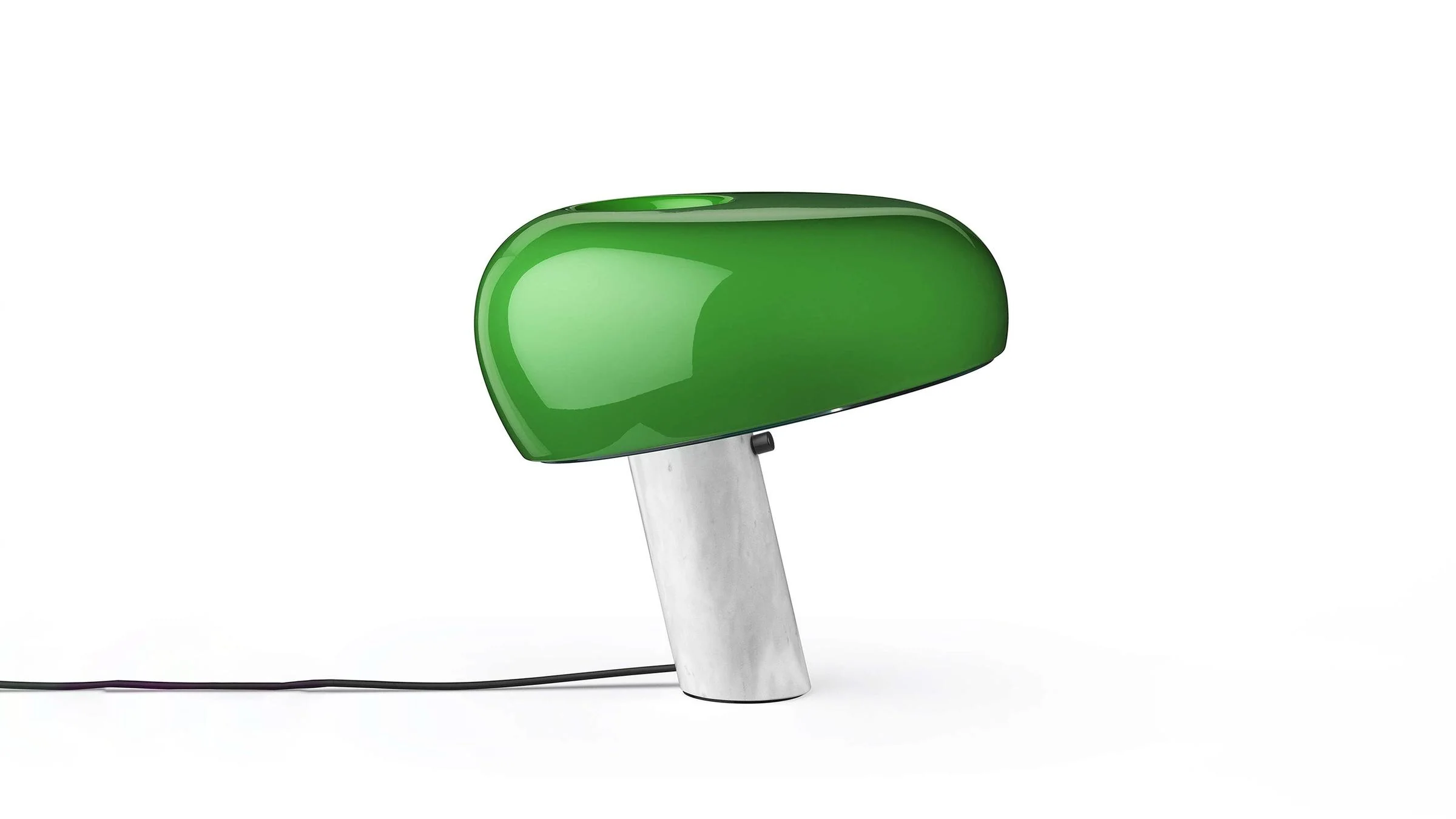




Snoopy Table Lamp
Designed in 1967 by Achille and Pier Giacomo Castiglioni, the Snoopy is one of the most recognized objects in twentieth-century Italian design. Its logic is immediate: a wide, slightly convex opal glass disc softens and directs light downward, while an enameled steel reflector controls spill with quiet precision. Beneath it all, a solid Carrara marble base grounds the composition with the kind of cool, weighty authority that no engineered material quite replicates.
- Opal glass diffuser disc for soft, directional illumination
- Enameled steel reflector in a choice of finishes
- Solid Carrara marble base
- Touch-sensitive dimmer integrated into the silhouette
The Castiglioni brothers regarded every object as a problem of logic first, aesthetics second. With Snoopy, those two concerns resolve into one. The lamp reads as sculpture from across a room and as a precision instrument at the desk. Produced continuously by Flos since its introduction, it remains a reference point for how form and function can share the same, unhurried gesture.
Product Information
Product Information
Shipping & Returns
Shipping & Returns
Description
Designed in 1967 by Achille and Pier Giacomo Castiglioni, the Snoopy is one of the most recognized objects in twentieth-century Italian design. Its logic is immediate: a wide, slightly convex opal glass disc softens and directs light downward, while an enameled steel reflector controls spill with quiet precision. Beneath it all, a solid Carrara marble base grounds the composition with the kind of cool, weighty authority that no engineered material quite replicates.
- Opal glass diffuser disc for soft, directional illumination
- Enameled steel reflector in a choice of finishes
- Solid Carrara marble base
- Touch-sensitive dimmer integrated into the silhouette
The Castiglioni brothers regarded every object as a problem of logic first, aesthetics second. With Snoopy, those two concerns resolve into one. The lamp reads as sculpture from across a room and as a precision instrument at the desk. Produced continuously by Flos since its introduction, it remains a reference point for how form and function can share the same, unhurried gesture.