Aalto Table 91
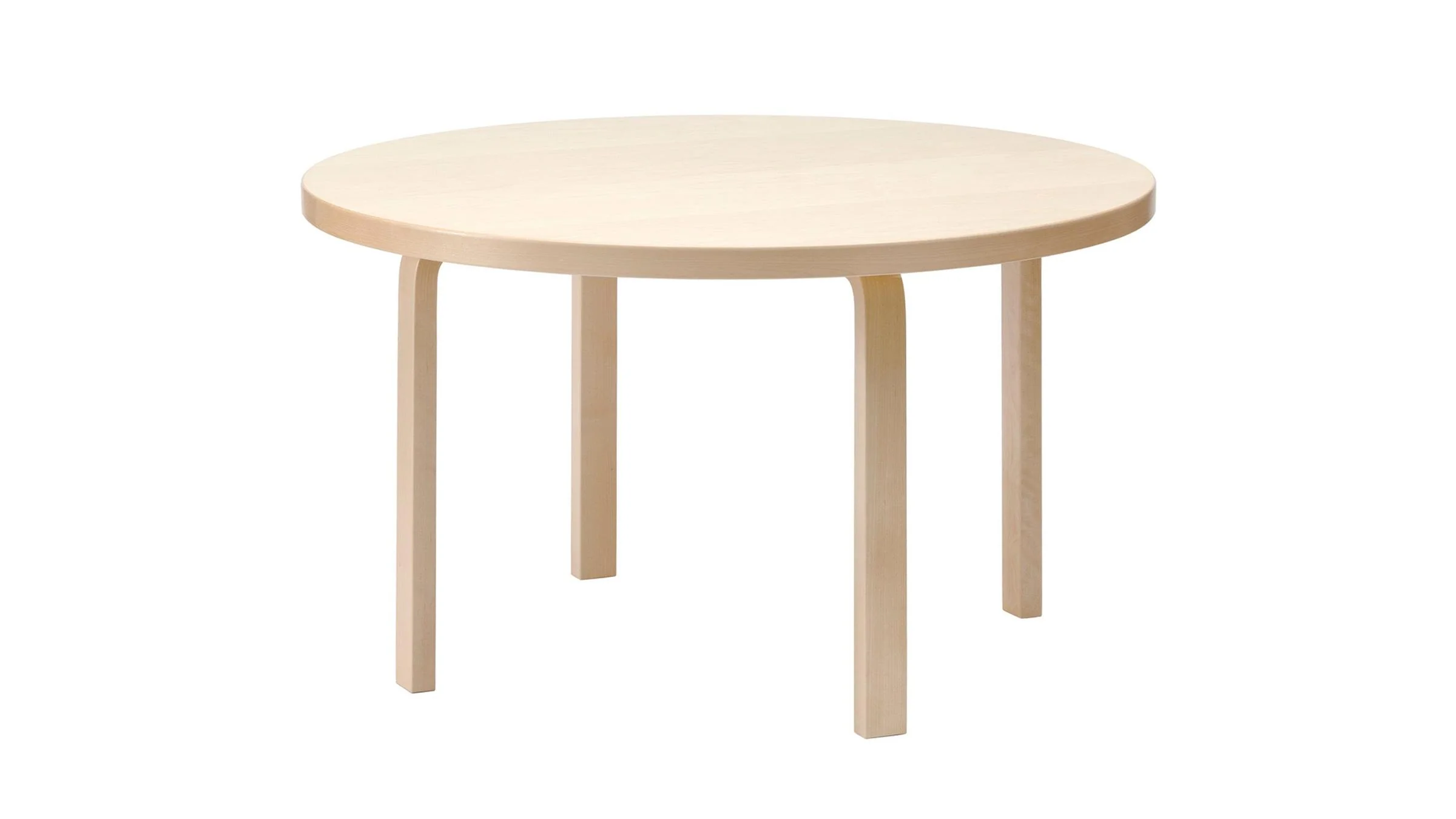
Alvar Aalto conceived the L-leg in 1933 as a solution to a problem that had long troubled furniture makers: how to join a vertical support to a horizontal surface without sacrificing warmth or visual lightness. The answer was bent wood, a material Aalto understood as both an engineering medium and a poetic one. The Table 91 gathers that logic into a round form, where the absence of corners softens the geometry and invites movement around it.
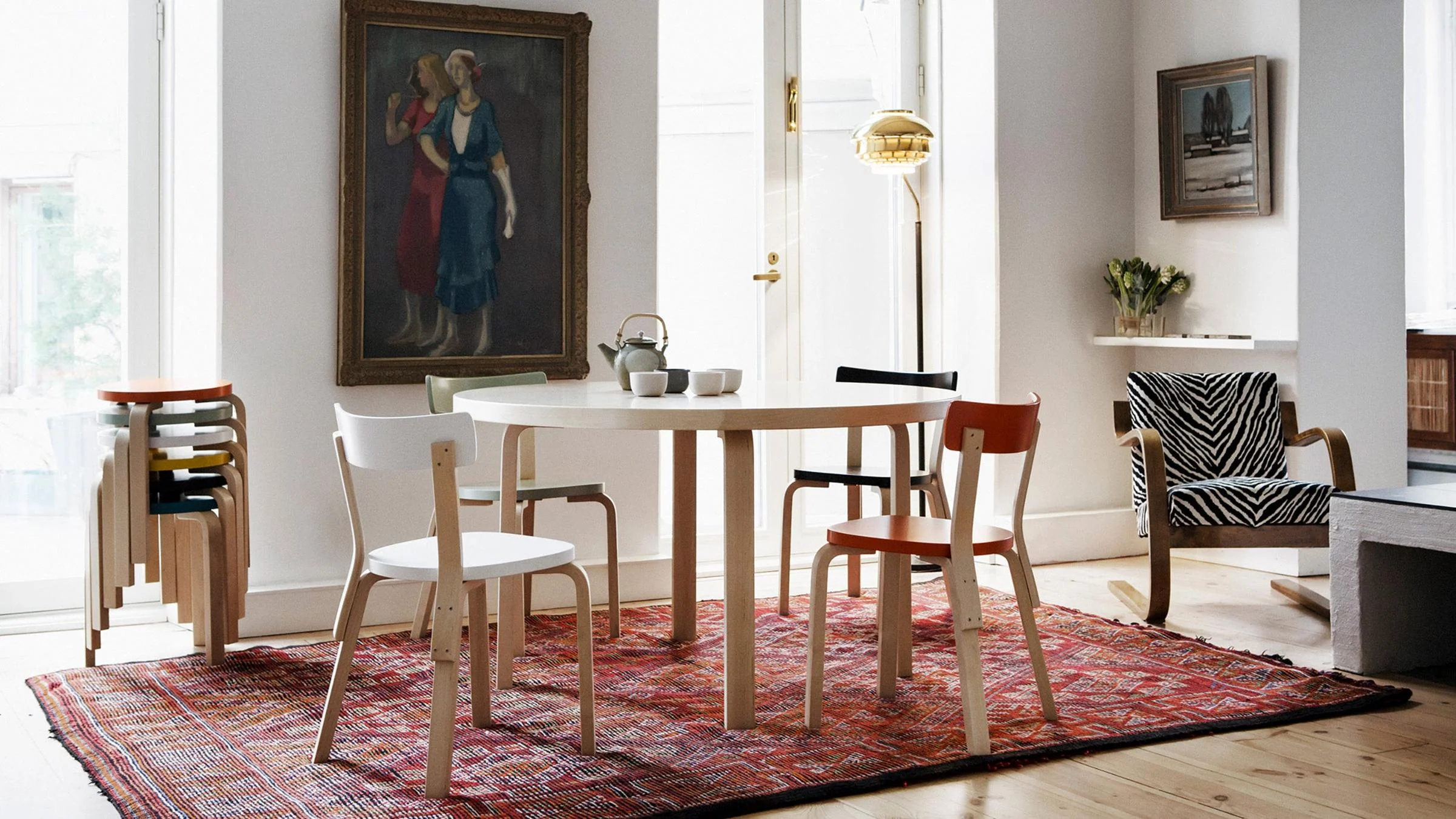
Finnish birch is the constant, whether the top is finished in natural veneer, durable laminate, or linoleum. Each surface brings a different atmosphere to the same honest structure. The inset leg position keeps seating unobstructed all the way around, a quiet decision that makes the table as functional as it is considered.
- Designed by Alvar Aalto, originally developed for Artek in the 1930s
- Signature bent-wood L-legs in Finnish birch
- Round tabletop available in birch veneer, laminate, or linoleum
- Inset legs for uninterrupted perimeter seating
- Appropriate for dining, studio, and institutional settings
Artek, the company Aalto co-founded in Helsinki in 1935, continues to produce the Table 91 with the same constructional principles and material standards established at its origin. It is a piece shaped by conviction rather than trend, and the form has needed no revision.
Original: $3,145.00
-65%$3,145.00
$1,100.75More Images

Aalto Table 91
Alvar Aalto conceived the L-leg in 1933 as a solution to a problem that had long troubled furniture makers: how to join a vertical support to a horizontal surface without sacrificing warmth or visual lightness. The answer was bent wood, a material Aalto understood as both an engineering medium and a poetic one. The Table 91 gathers that logic into a round form, where the absence of corners softens the geometry and invites movement around it.
Finnish birch is the constant, whether the top is finished in natural veneer, durable laminate, or linoleum. Each surface brings a different atmosphere to the same honest structure. The inset leg position keeps seating unobstructed all the way around, a quiet decision that makes the table as functional as it is considered.
- Designed by Alvar Aalto, originally developed for Artek in the 1930s
- Signature bent-wood L-legs in Finnish birch
- Round tabletop available in birch veneer, laminate, or linoleum
- Inset legs for uninterrupted perimeter seating
- Appropriate for dining, studio, and institutional settings
Artek, the company Aalto co-founded in Helsinki in 1935, continues to produce the Table 91 with the same constructional principles and material standards established at its origin. It is a piece shaped by conviction rather than trend, and the form has needed no revision.
Product Information
Product Information
Shipping & Returns
Shipping & Returns
Description
Alvar Aalto conceived the L-leg in 1933 as a solution to a problem that had long troubled furniture makers: how to join a vertical support to a horizontal surface without sacrificing warmth or visual lightness. The answer was bent wood, a material Aalto understood as both an engineering medium and a poetic one. The Table 91 gathers that logic into a round form, where the absence of corners softens the geometry and invites movement around it.
Finnish birch is the constant, whether the top is finished in natural veneer, durable laminate, or linoleum. Each surface brings a different atmosphere to the same honest structure. The inset leg position keeps seating unobstructed all the way around, a quiet decision that makes the table as functional as it is considered.
- Designed by Alvar Aalto, originally developed for Artek in the 1930s
- Signature bent-wood L-legs in Finnish birch
- Round tabletop available in birch veneer, laminate, or linoleum
- Inset legs for uninterrupted perimeter seating
- Appropriate for dining, studio, and institutional settings
Artek, the company Aalto co-founded in Helsinki in 1935, continues to produce the Table 91 with the same constructional principles and material standards established at its origin. It is a piece shaped by conviction rather than trend, and the form has needed no revision.